
Take a Virtual Tour of the Museum
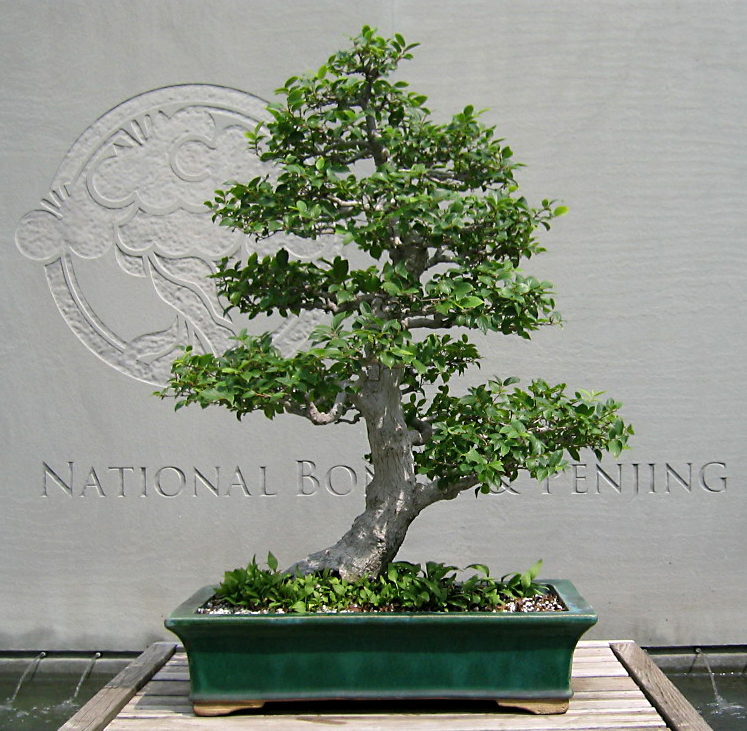
Celtis sinensis
In training since 1946
Gift of Shu-ying Lui, 1986
This is a deciduous tree native to East Asia. When the tree is bare in the winter you can appreciate the zig-zag effect of the pruning style beloved of Chinese penjing artists.
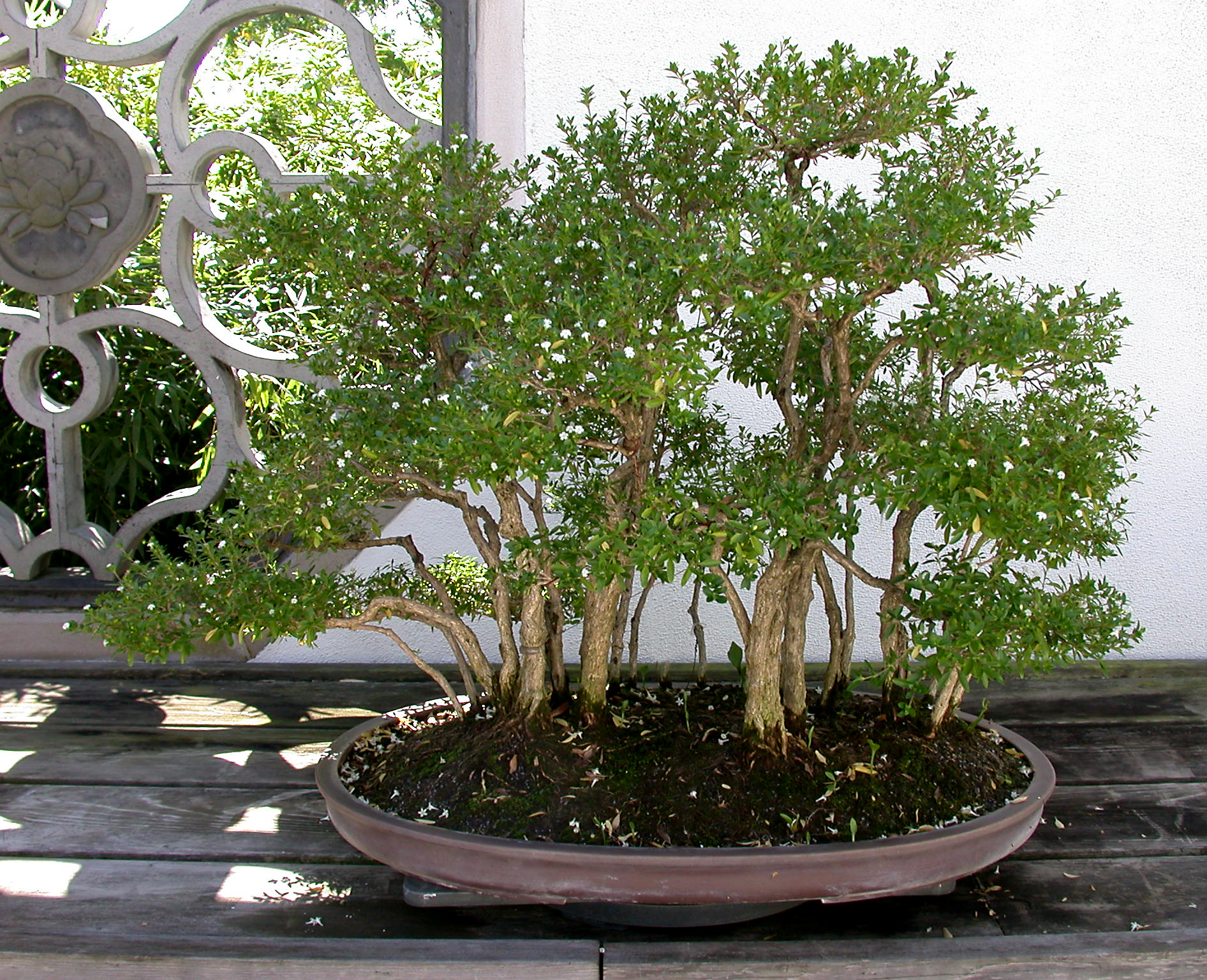
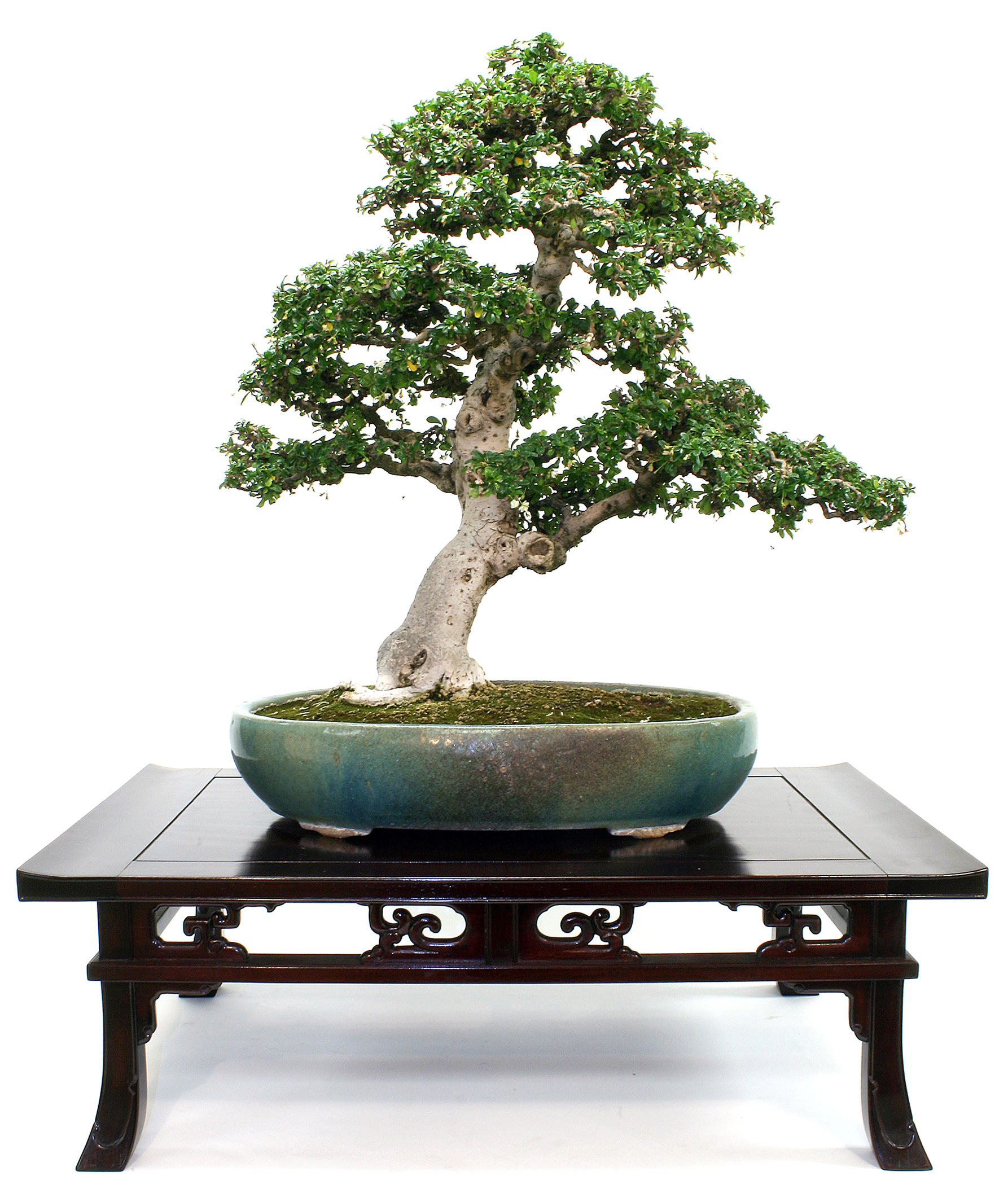
Serissa japonica
In training since 1951
Gift of Shu-ying Lui, 1986
Coming from temperate regions in Asia, this species blooms practically all year round. There are usually so many tiny white flowers that it is also known as the "tree of a thousand stars."
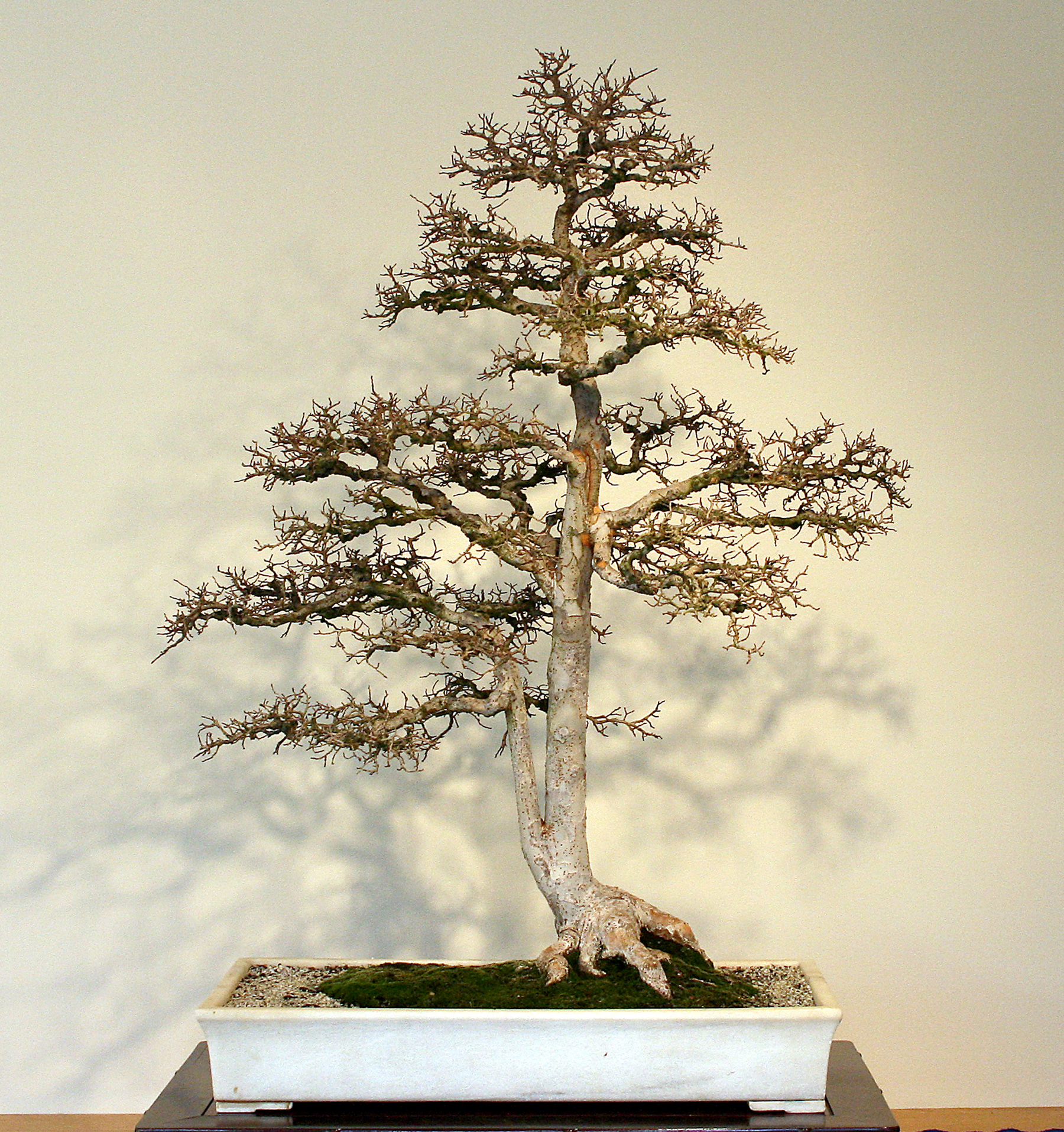
Ulmus parvifolia
In training since 1961
Gift of Shu-ying Lui, 1986
The trunk of this tree exhibits a flaking bark of grey, pink and tan "camouflage" pattern that explains its other common name--lacebark elm.
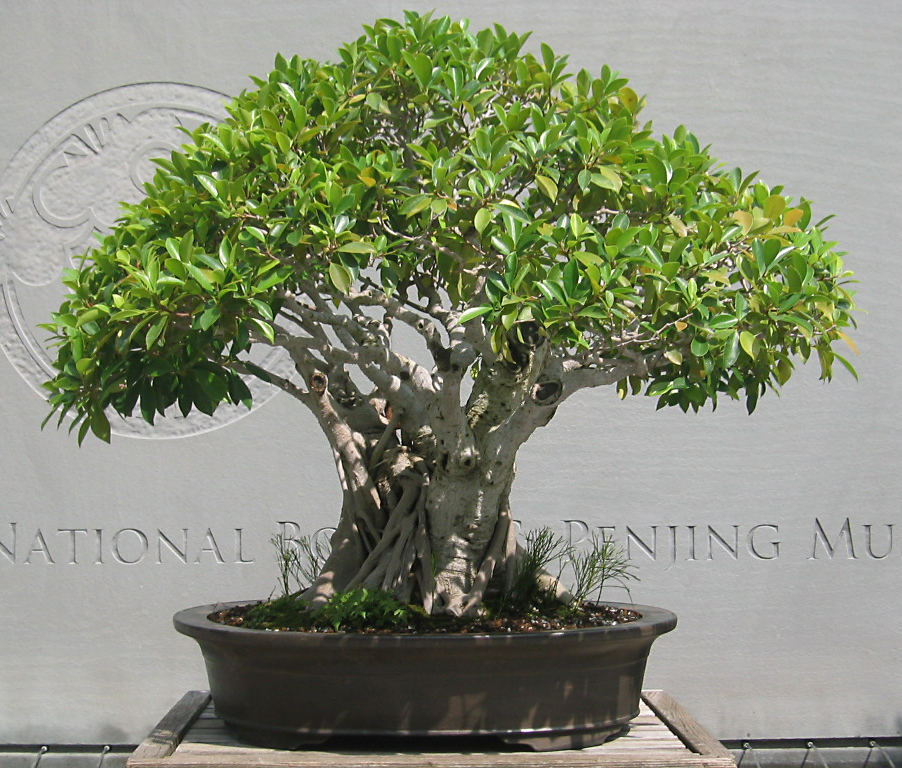
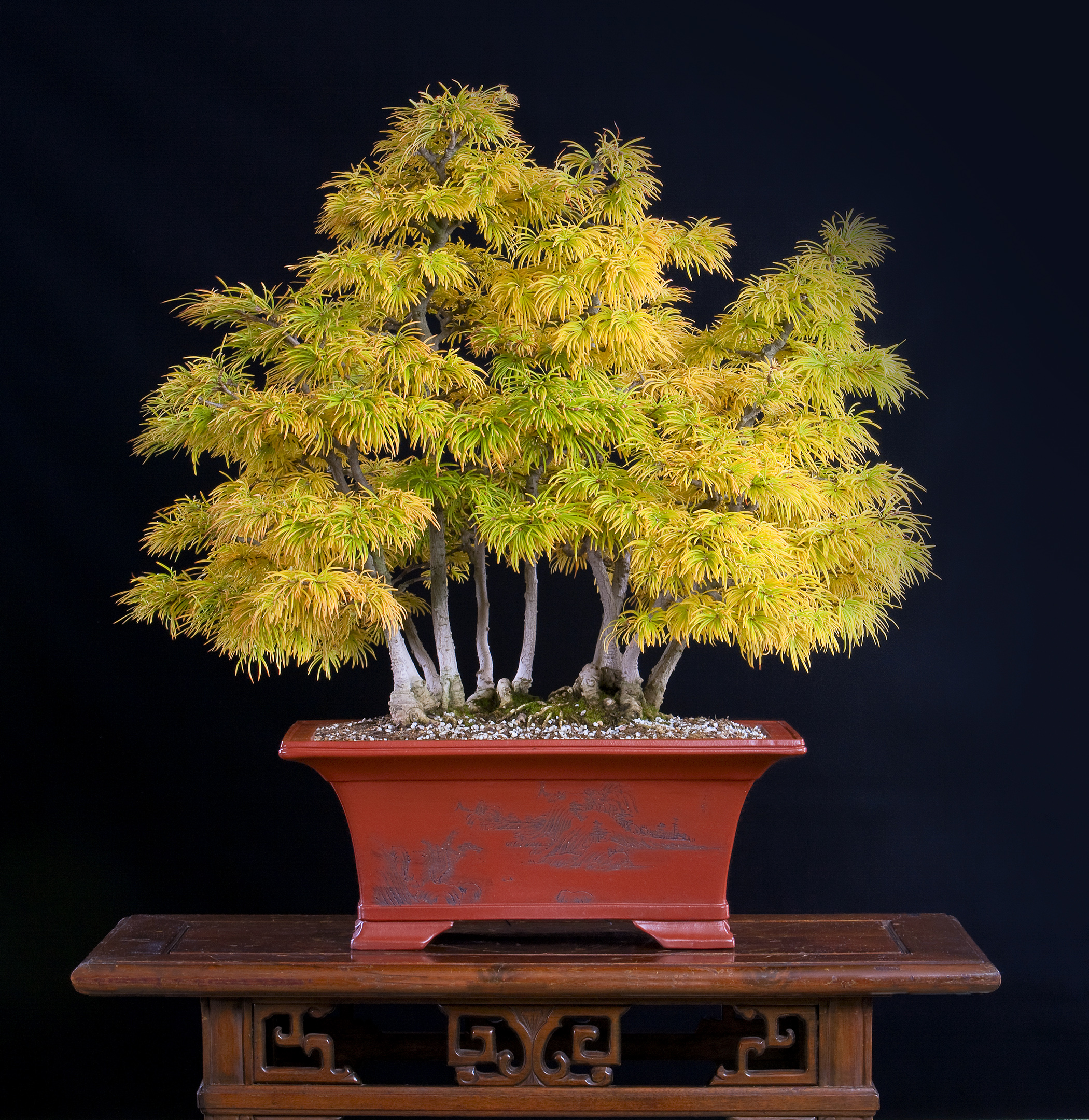
Pseudolarix amabilis
In training since 1971
Gift of Shu-ying Lui, 1986
The golden-larch is a rare and unusual conifer from China that turns bright golden yellow in the fall before dropping its needles.
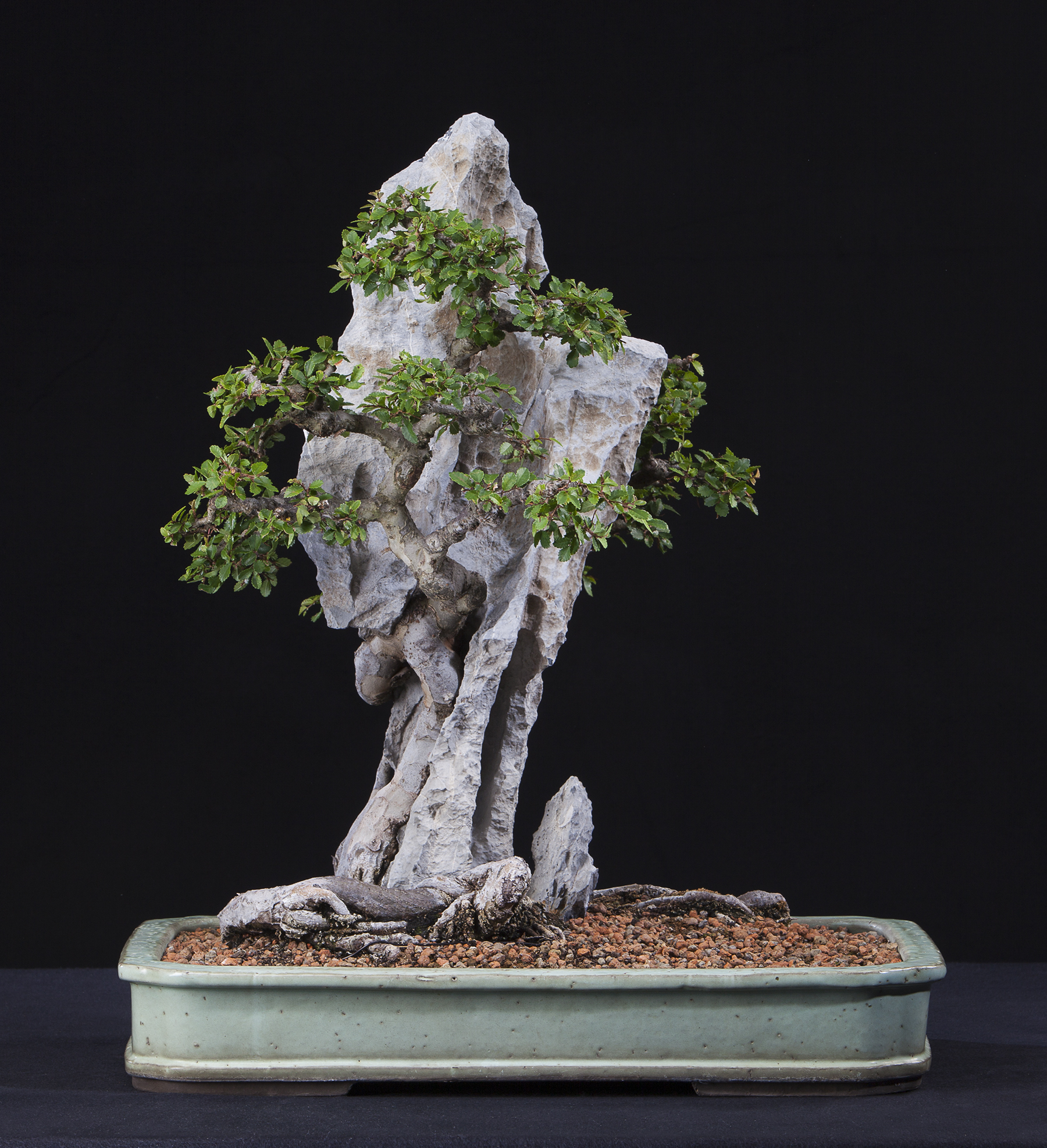
Ulmus parvifolia
In training since 1961
Gift of Yee-sun Wu, 1986
In pairing a rock with a tree, it is important to keep the tree from becoming too big for the rock in order to maintain a balance.
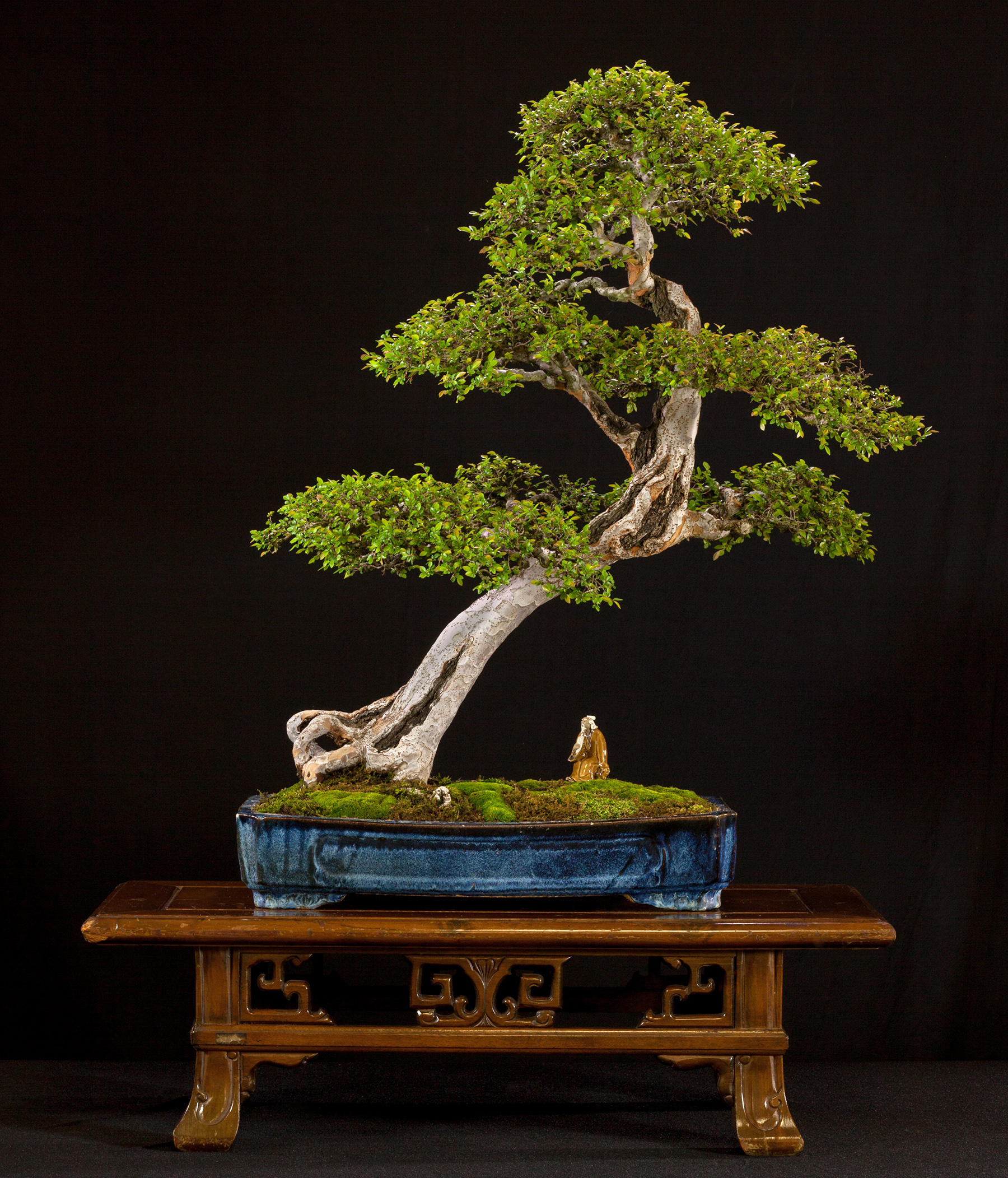
Ulmus parvifolia
In training since 1956
Gift of Yee-sun Wu, 1986
Chinese penjing are often styled with contorted roots and branches which give them a sense of lively movement.
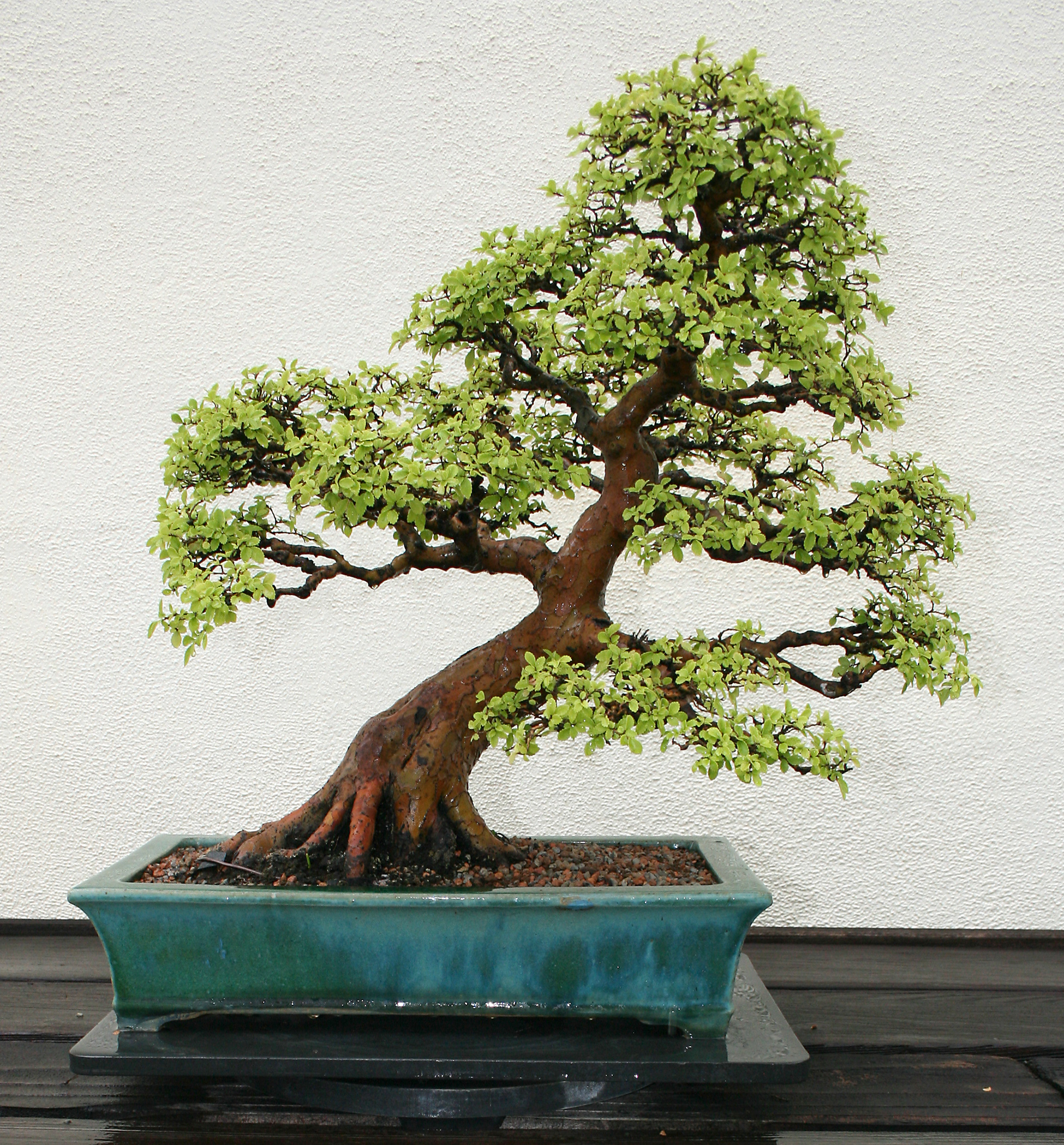
Ulmus parvifolia
In training since 1951
Gift of Yee-sun Wu, 1986
The leaves of a Chinese elm are so tiny that if we saw a picture of this tree without the pot, we can easily be fooled into believing this is a much larger tree.
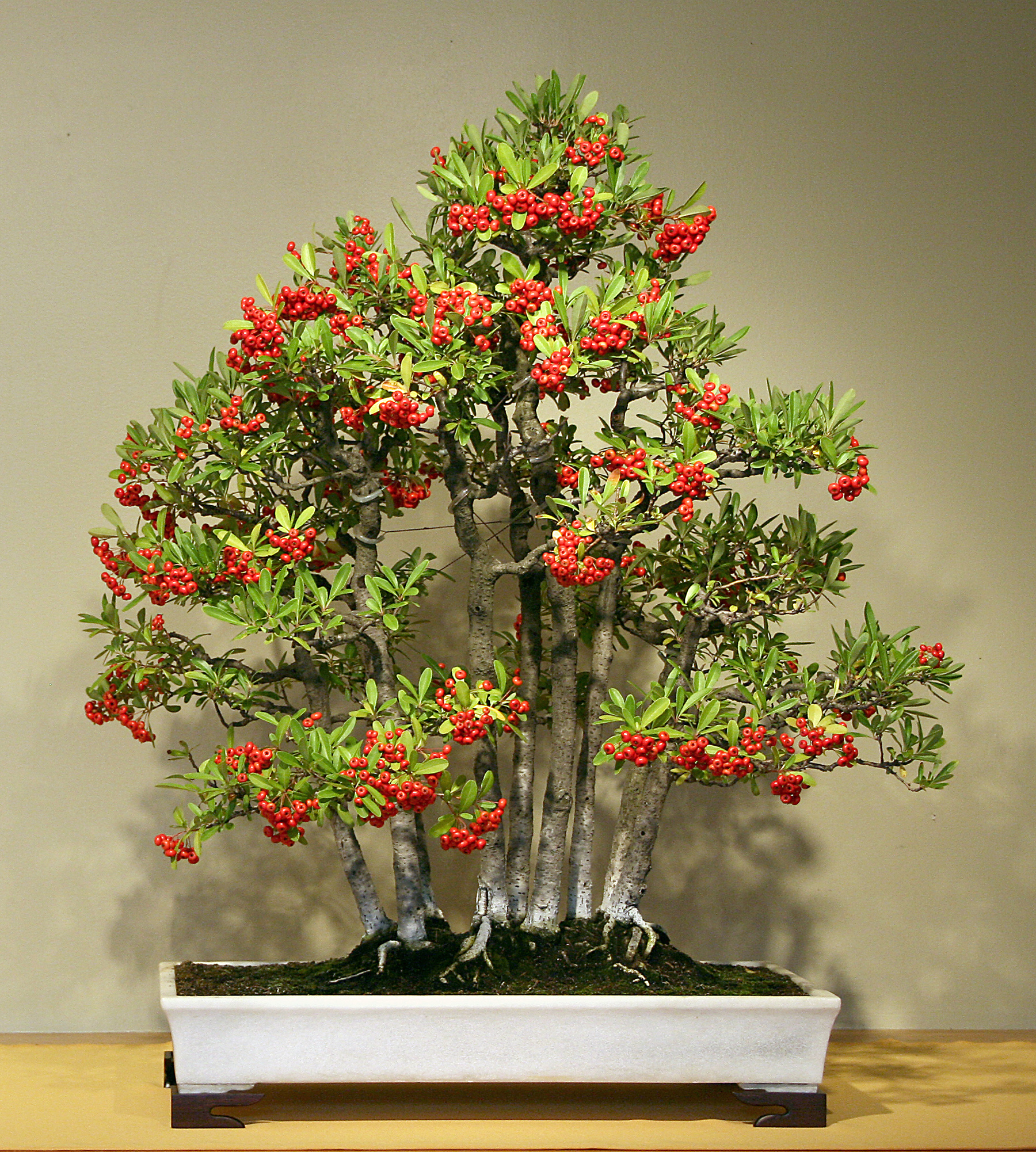
Pyracantha crenulata
In training since 1966
Gift of Yee-sun Wu, 1986
This forest of firethorn trees produces small red fruits that last through the winter months. In the spring, the trees are covered with fragrant white blossoms.
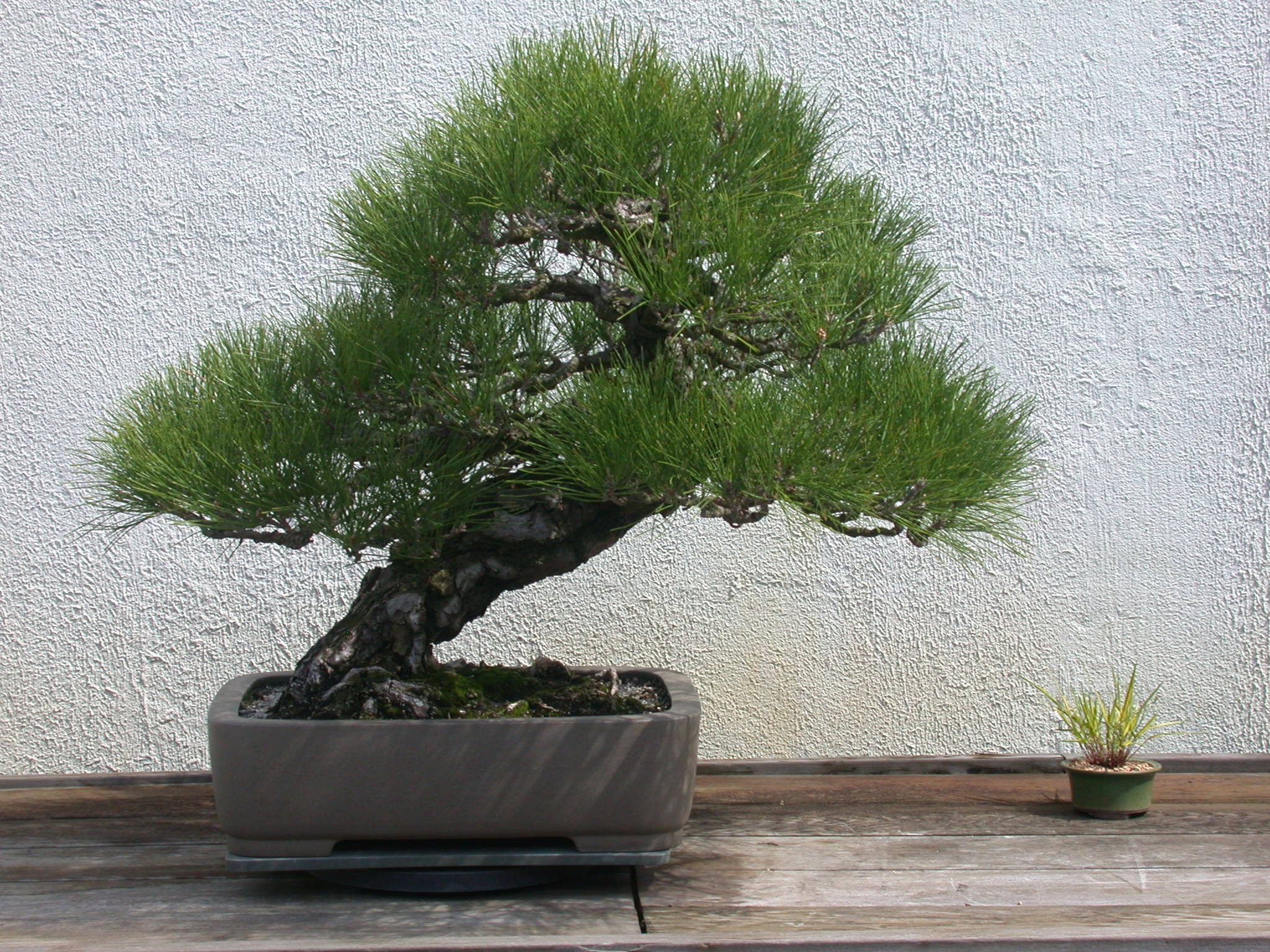
Pinus thunbergii
In training since 1895
Gift of Saichi Suzuki, 1976
The Japanese bonsai gift to the United States in honor of our bicentennial included 50 trees to represent the states, one of which had to be the same age as the country. This bonsai was chosen as the first tree because it was believed to be about 200 years old at the time of the dedication in 1976. It was originally collected from the Atsumi peninsula, southwest of Tokyo.
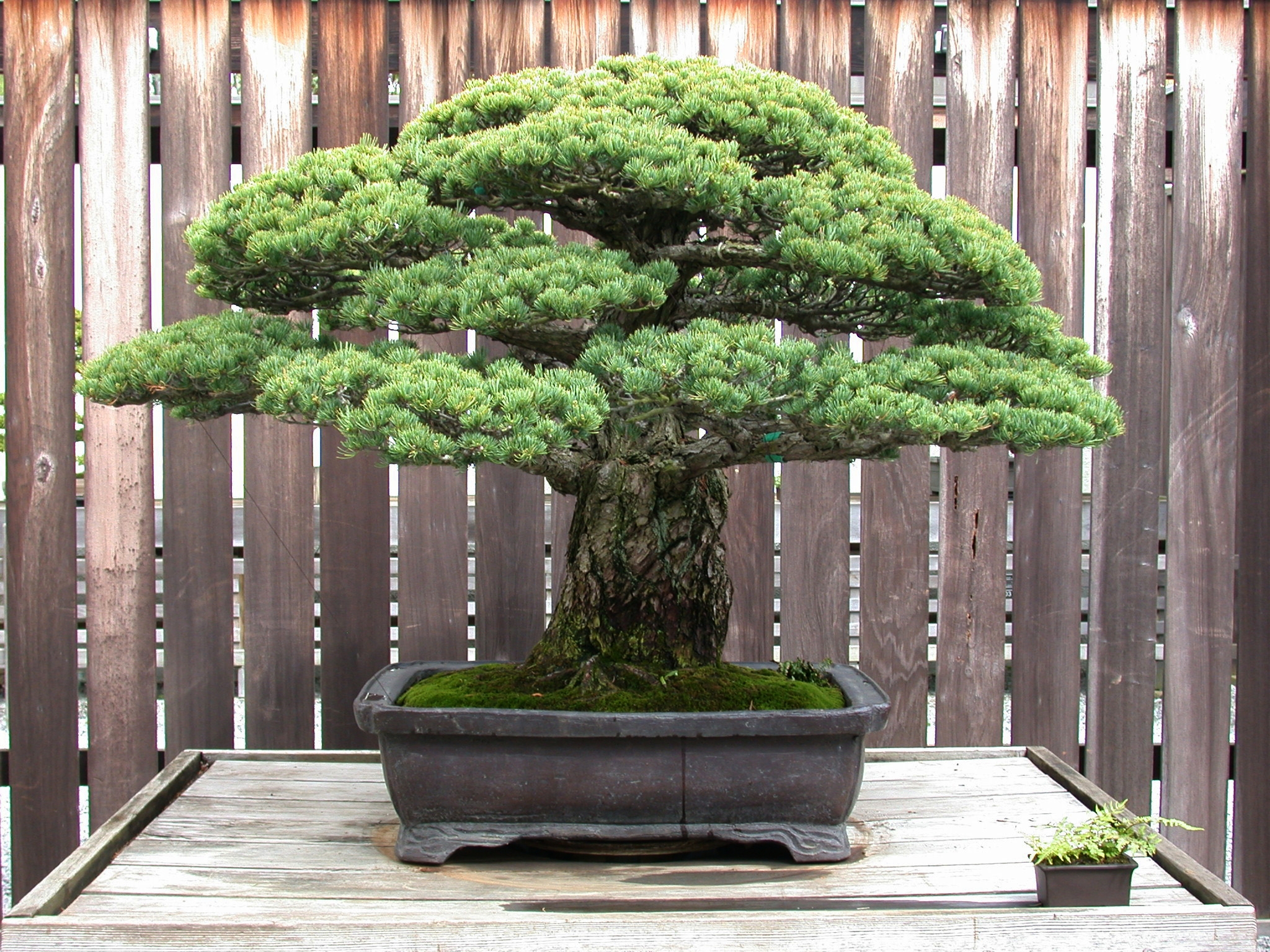
Pinus parviflora ‘Miyajima’
In training since 1625
Gift of Masaru Yamaki, 1976
This is the oldest bonsai in the Museum and was in the same family in Japan from the time it was created almost 400 years ago until gifted to the U.S. in 1976.
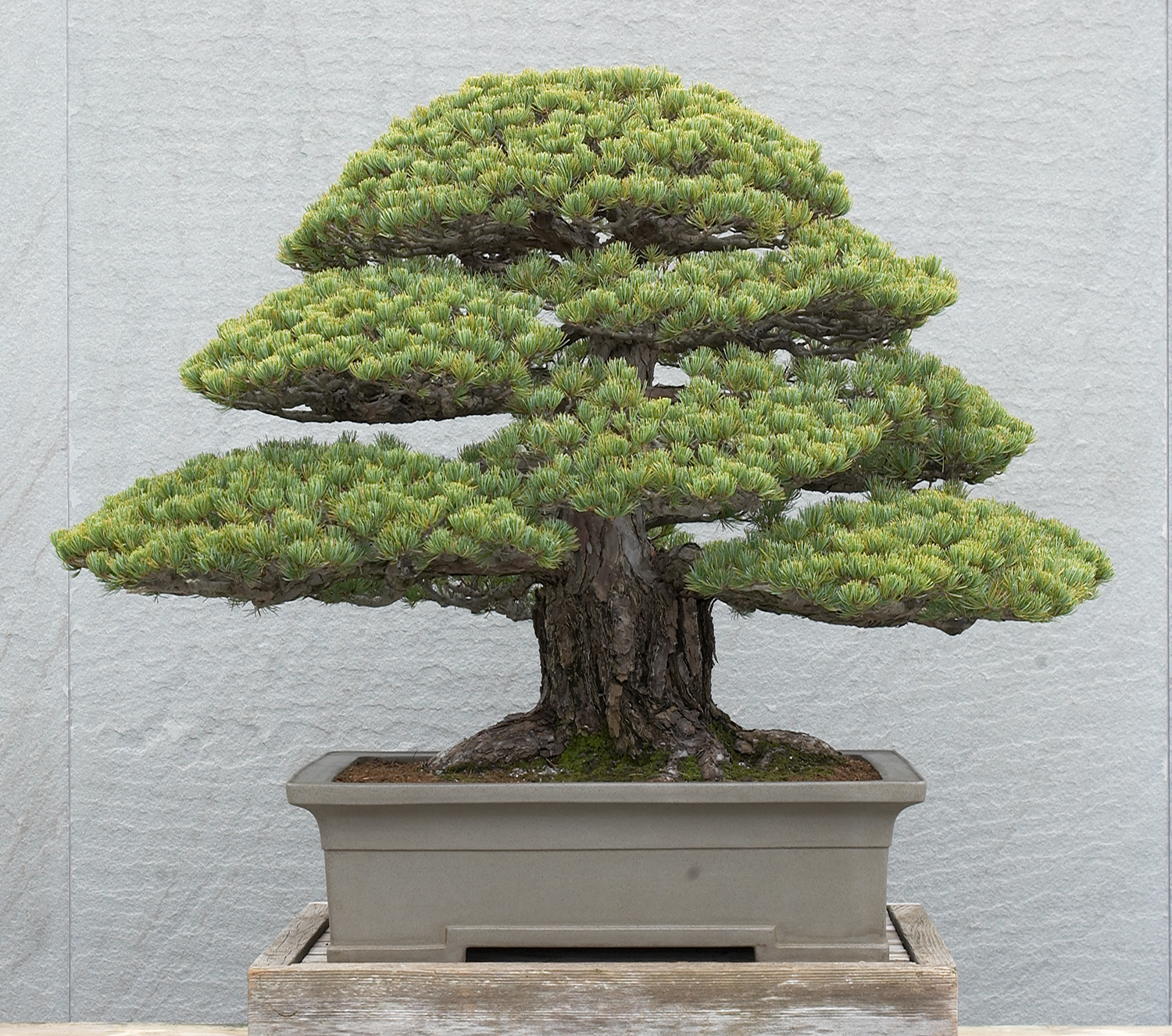
Pinus parviflora
Gift of Daizo Iwasaki, 1976
One of the most important elements of a bonsai is the quality of its surface roots. This pine has especially dramatic ones that seem to grab the earth.
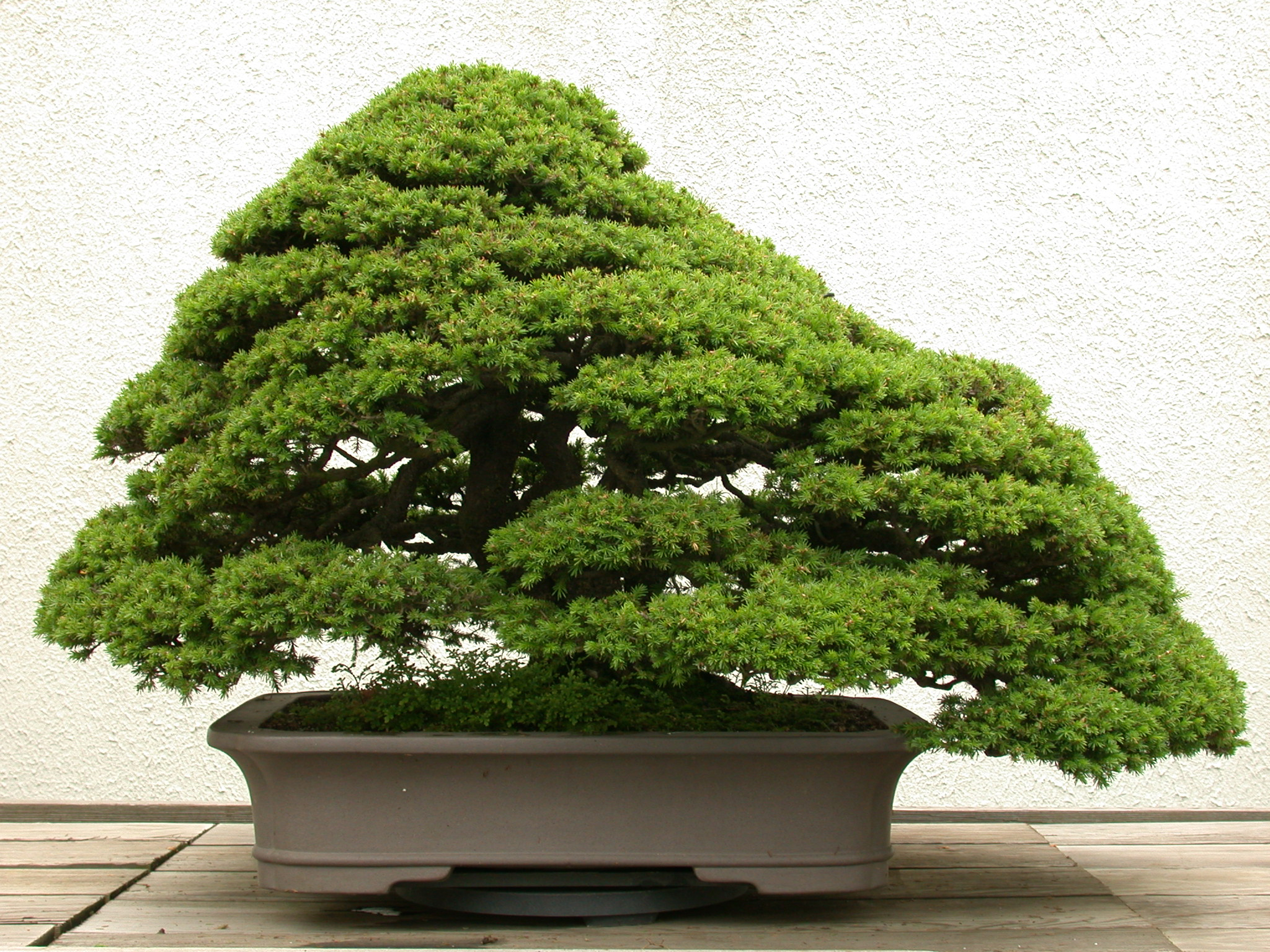
Picea glehnii
In training since 1925
Gift of Tokuei Tanaka, 1976
When this tree was collected in Japan, it was probably about 120 years old. It is difficult to know the exact age of a bonsai that first grew in the wild.
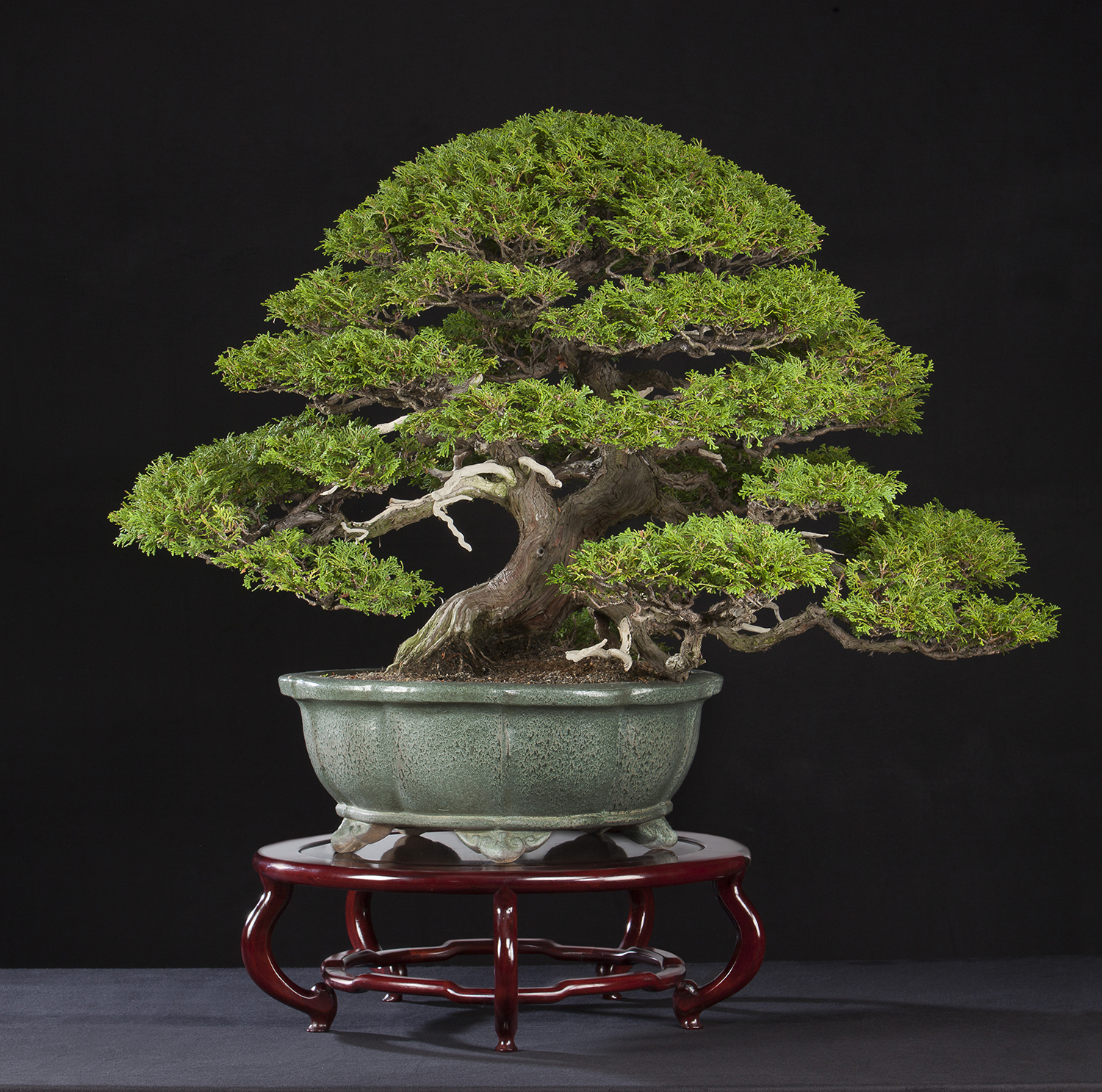
Chamaecyparis obtusa
In training since 1875
Gift of Shuhei Nagai, 1976
The way the bonsai artist thinned and shaped the foliage on this tree helps create the appearance of an ancient tree, which is a primary goal in bonsai.
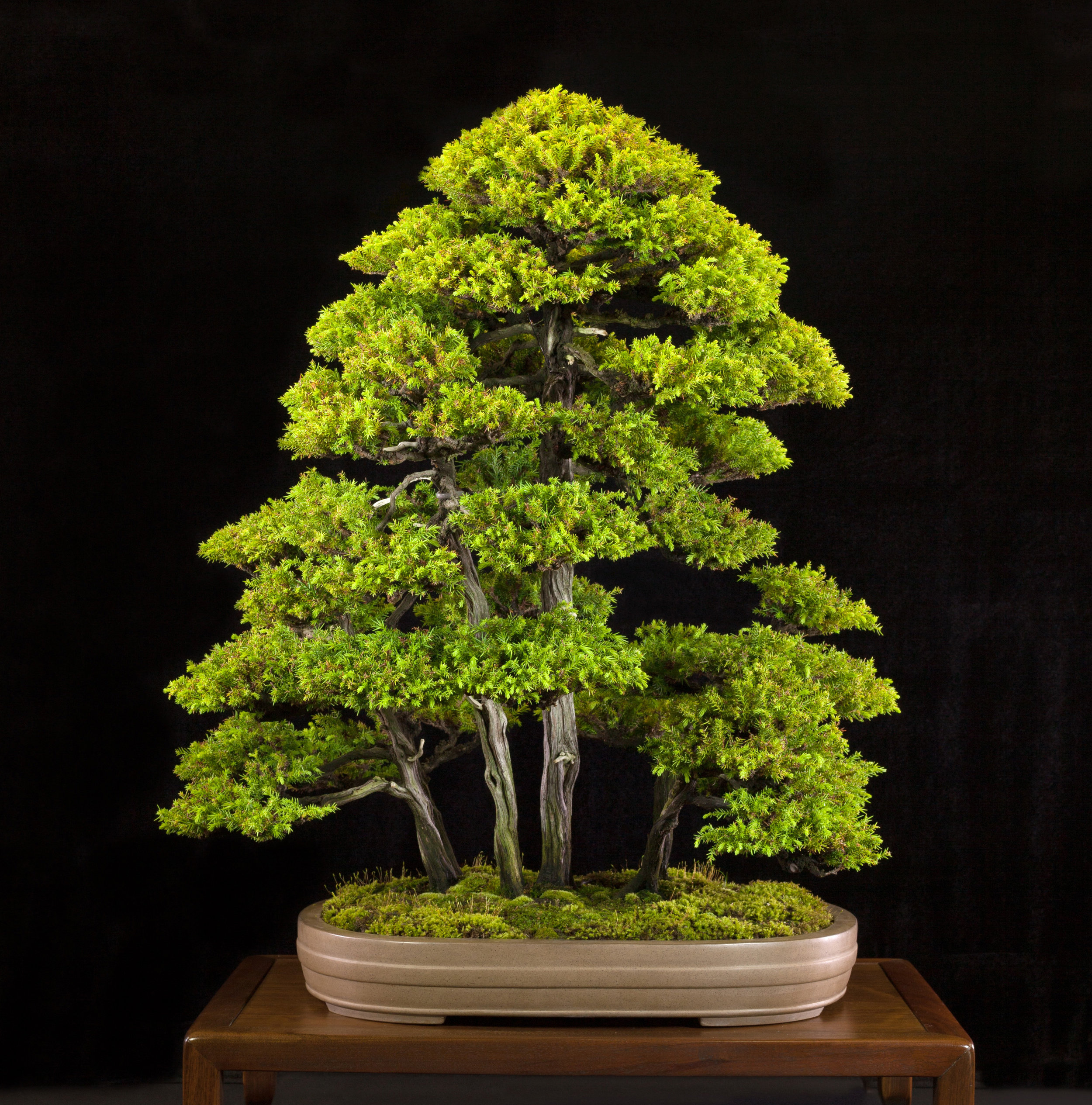
Cryptomeria japonica
In training since 1905
Gift of Eisaku Sato, 1976
This bonsai suggests a peaceful garden forest near a place of worship. In Japan, one often finds a temple or shrine nestled within a shady cryptomeria grove in the countryside.
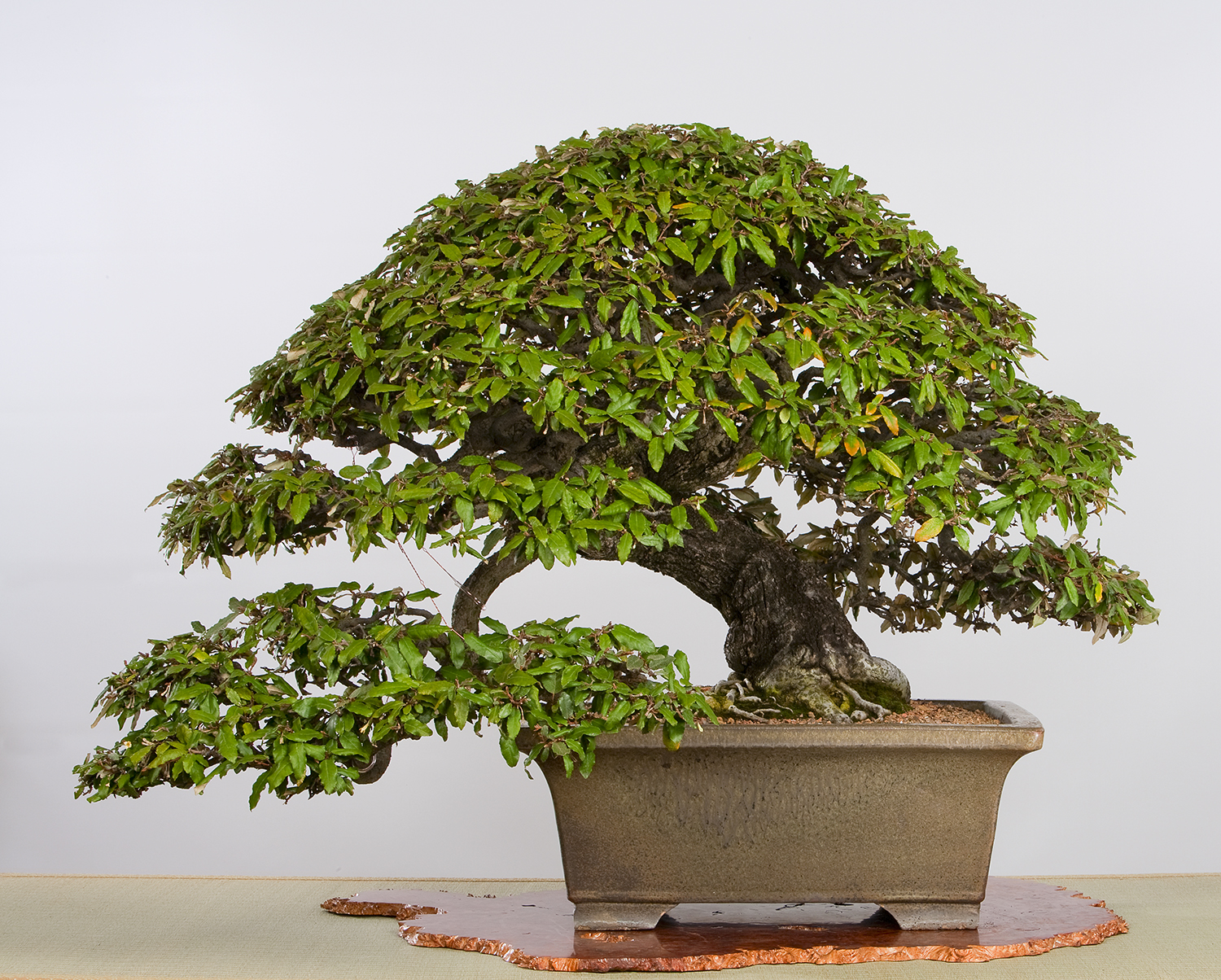
Elaeagnus pungens
In training since 1825
Gift of Teisuke Takahashi, 1976
Look for berries in the springtime on this flowering and fruiting shrub. Started from a cutting in 1825, this plant has been cultivated as a bonsai through its entire life.
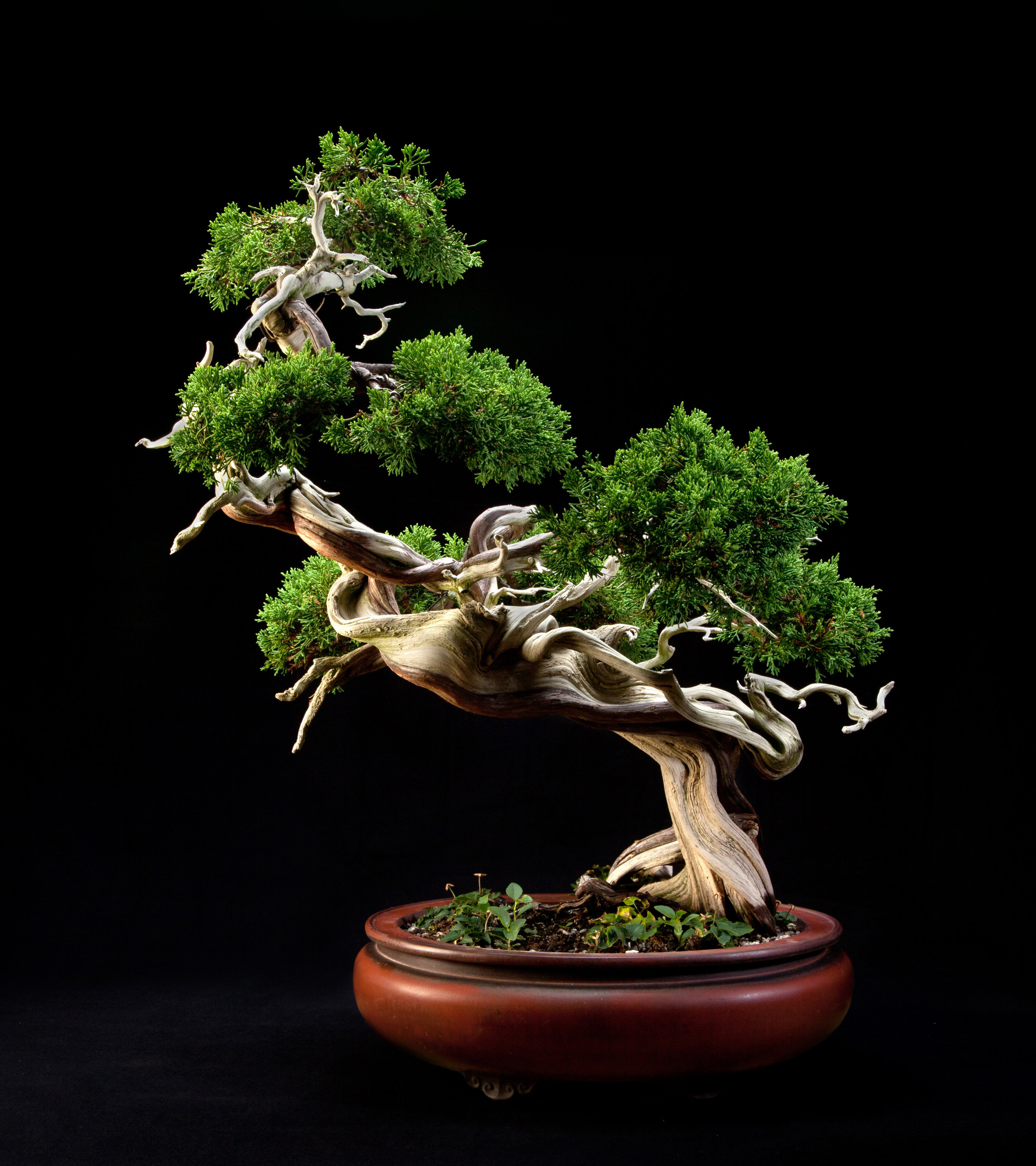
Juniperus chinensis var. sargentii
In training since 1905
Gift of Kenichi Oguchi, 1976
The design of the museum logo was inspired by this bonsai with its rhythmic lines of dead wood contrasting with green foliage pads.
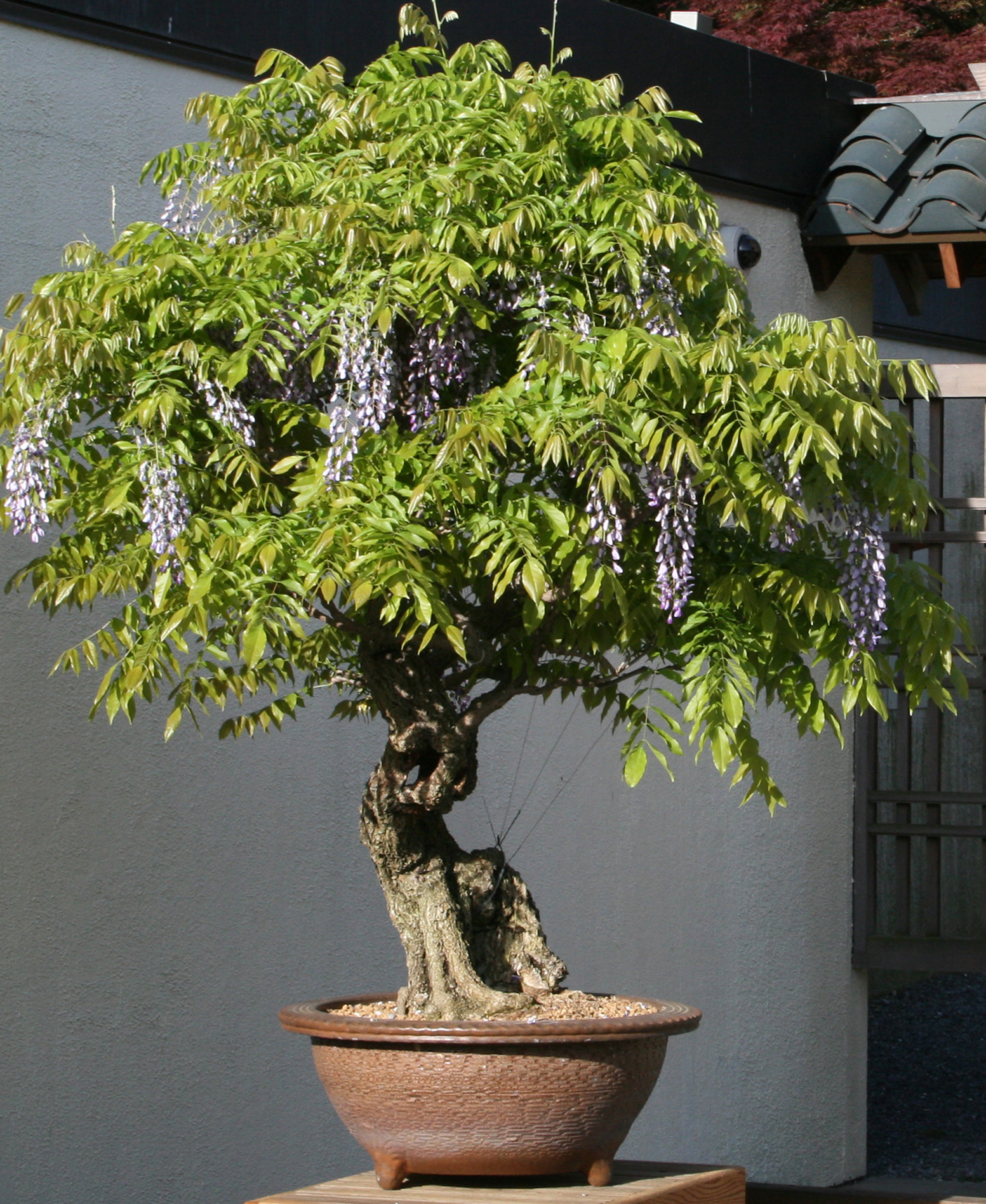
Wisteria floribunda
In training since 1925
Gift of Kihei Tamura, 1976
Wisteria does not produce fine twigs, so it takes an especially skilled bonsai artist to create dense foliage when shaping it into a bonsai.
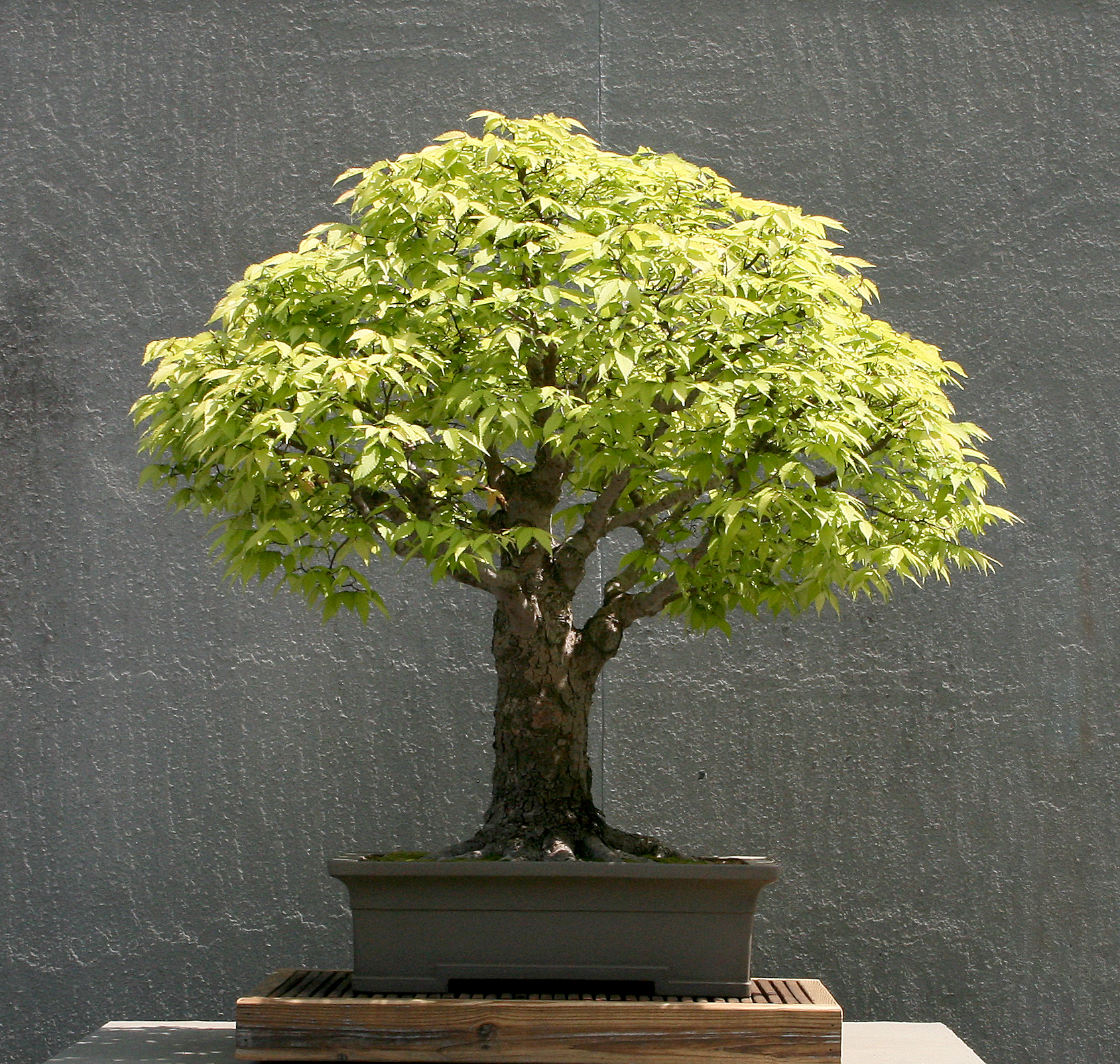
Zelkova serrata
In training since 1895
Gift of Yoshibumi Itoigawa, 1976
This bonsai is only 4 feet tall, yet it gives the appearance of a giant tree with a thick trunk, powerful surface roots, and tapered branching.
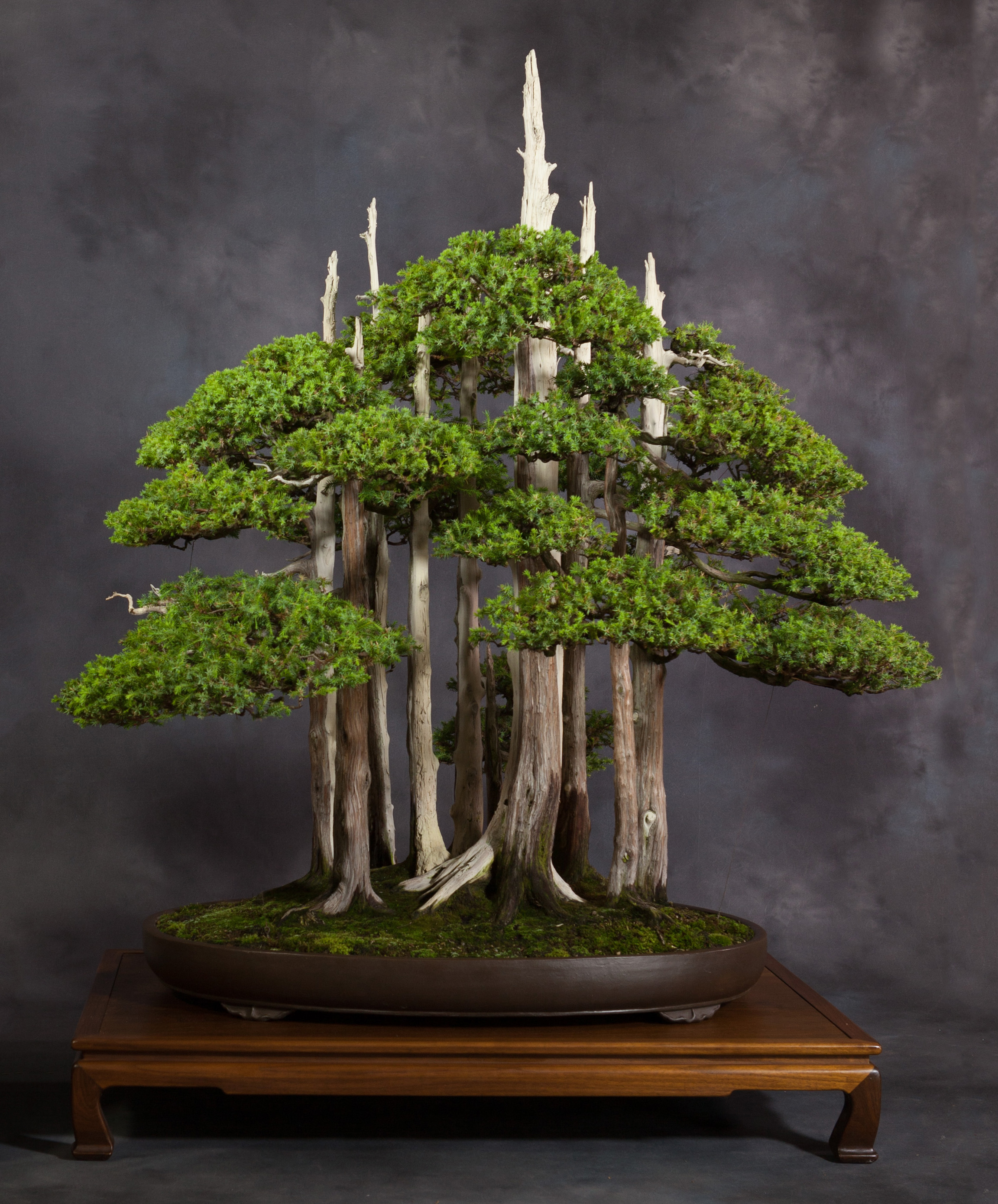
Juniperus chinensis
In Training Since 1953
Gift of John Yoshio Naka, 1984
This is one of the most recognized bonsai in the world. Bonsai master John Naka created his forest with 11 trees—one for each of his grandchildren—and named it Goshin, meaning "protector of the spirit."
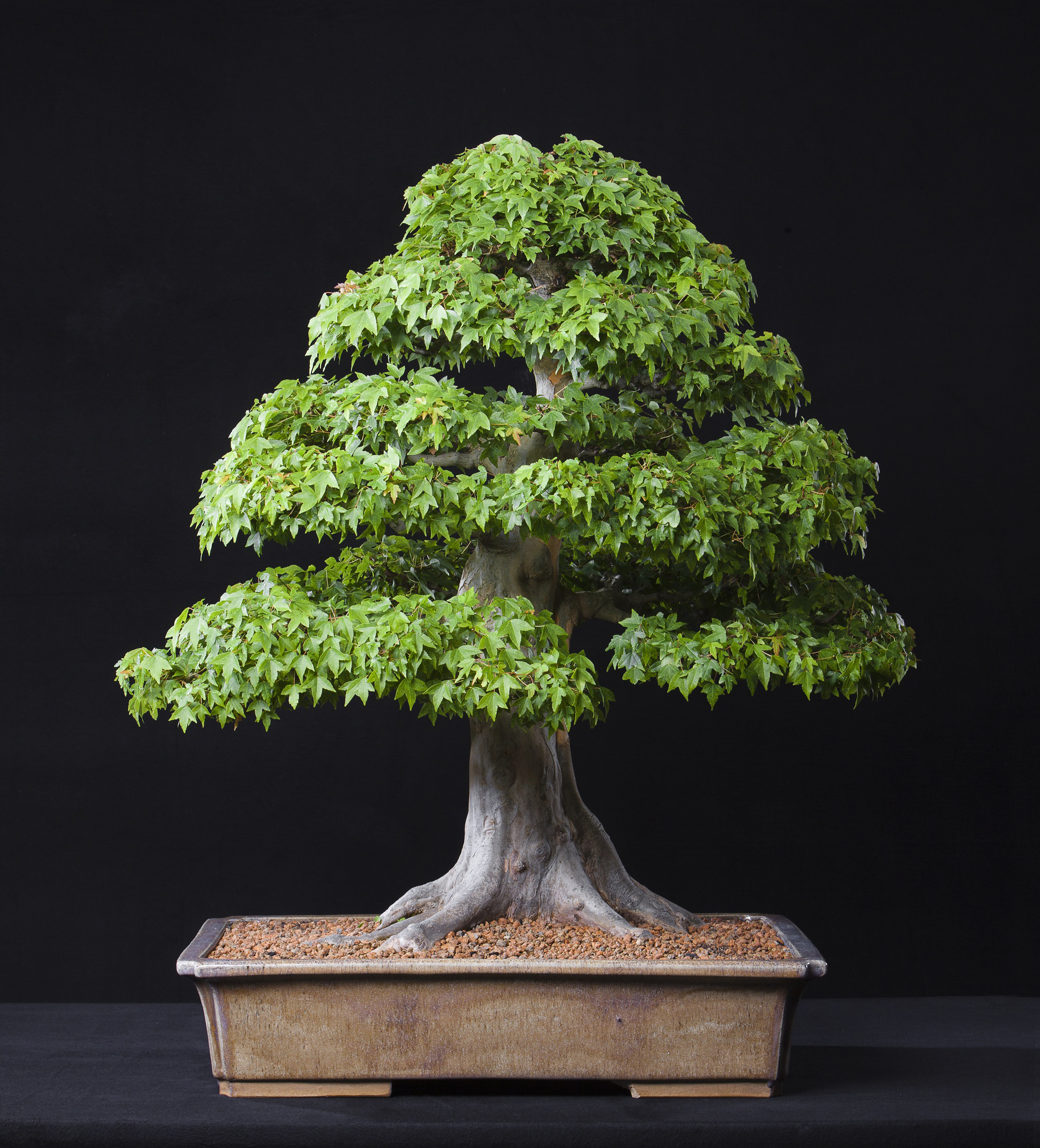
Acer buergerianum
In training since 1975
Gift of Ted C. Guyger, 1990
Bonsai created from trees collected from the outdoors start out with a thicker, more mature trunk. Before it was pruned, this bonsai was a 23-foot tall tree.
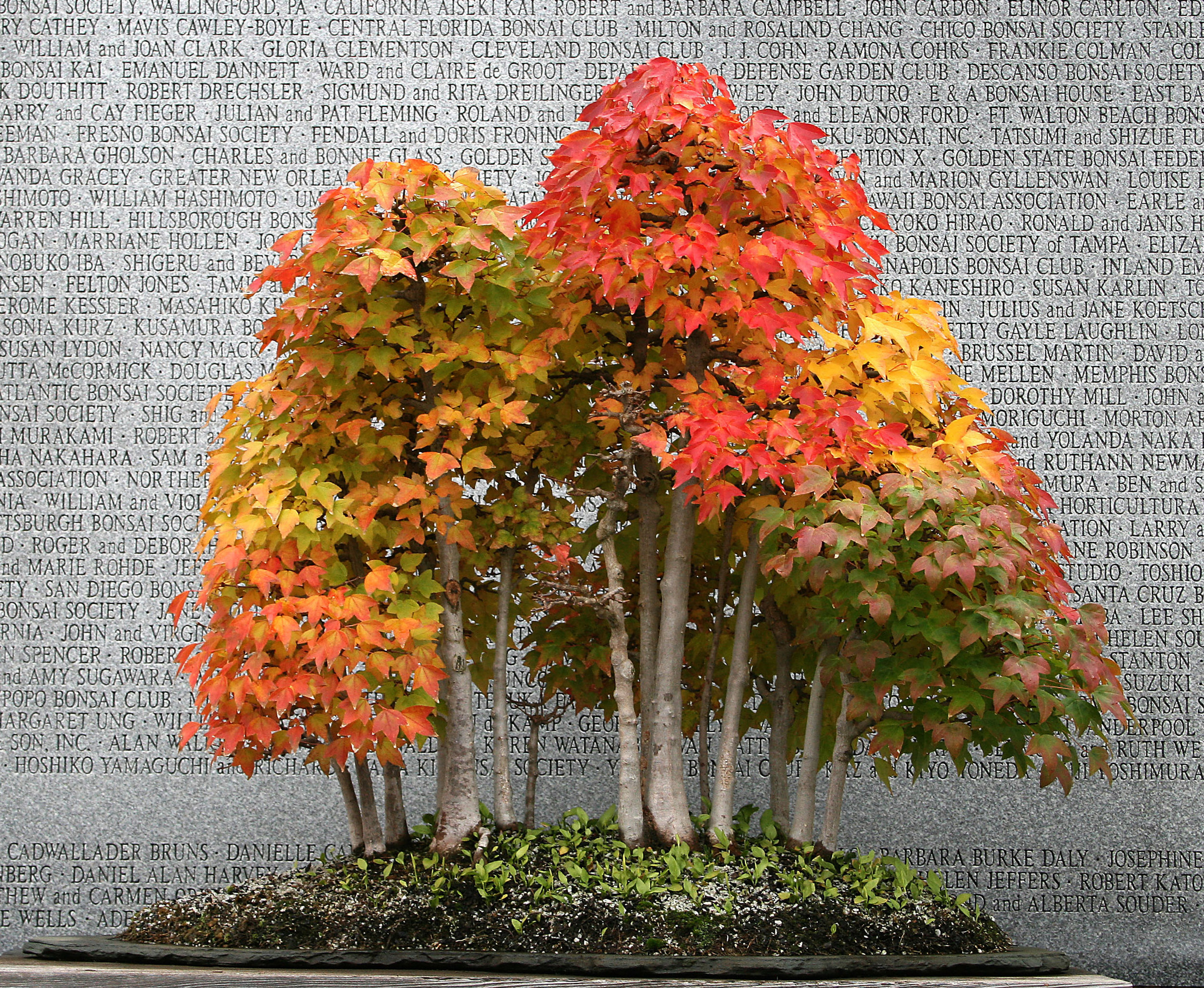
Acer buergerianum
In training since 1985
Gift of Brussel Martin, 1990
Forest-style bonsai are often planted on a rock slab with the soil held in place by moss. This creates a natural-looking hillock setting.
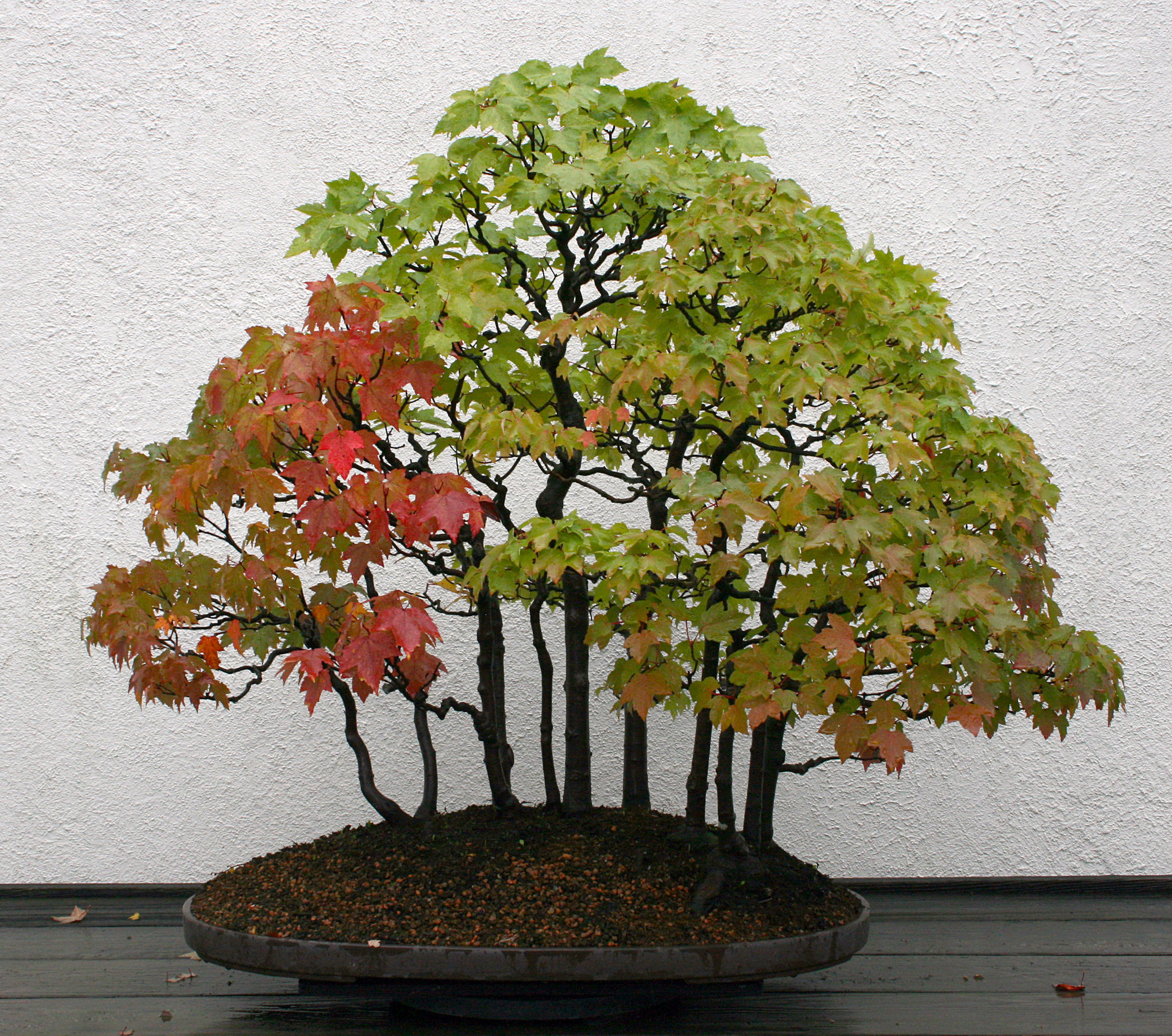
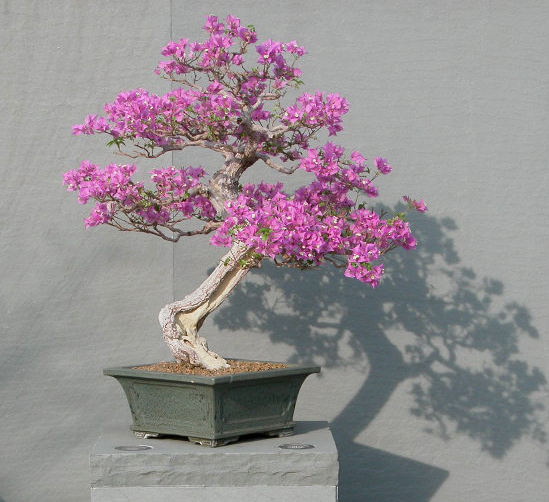
Bougainvillea glabra
In training since 1985
Gift of Harold M. Harvey, 1990
Even though bougainvillea is a vine, it can be grown as a bonsai by continually pruning the long growth.
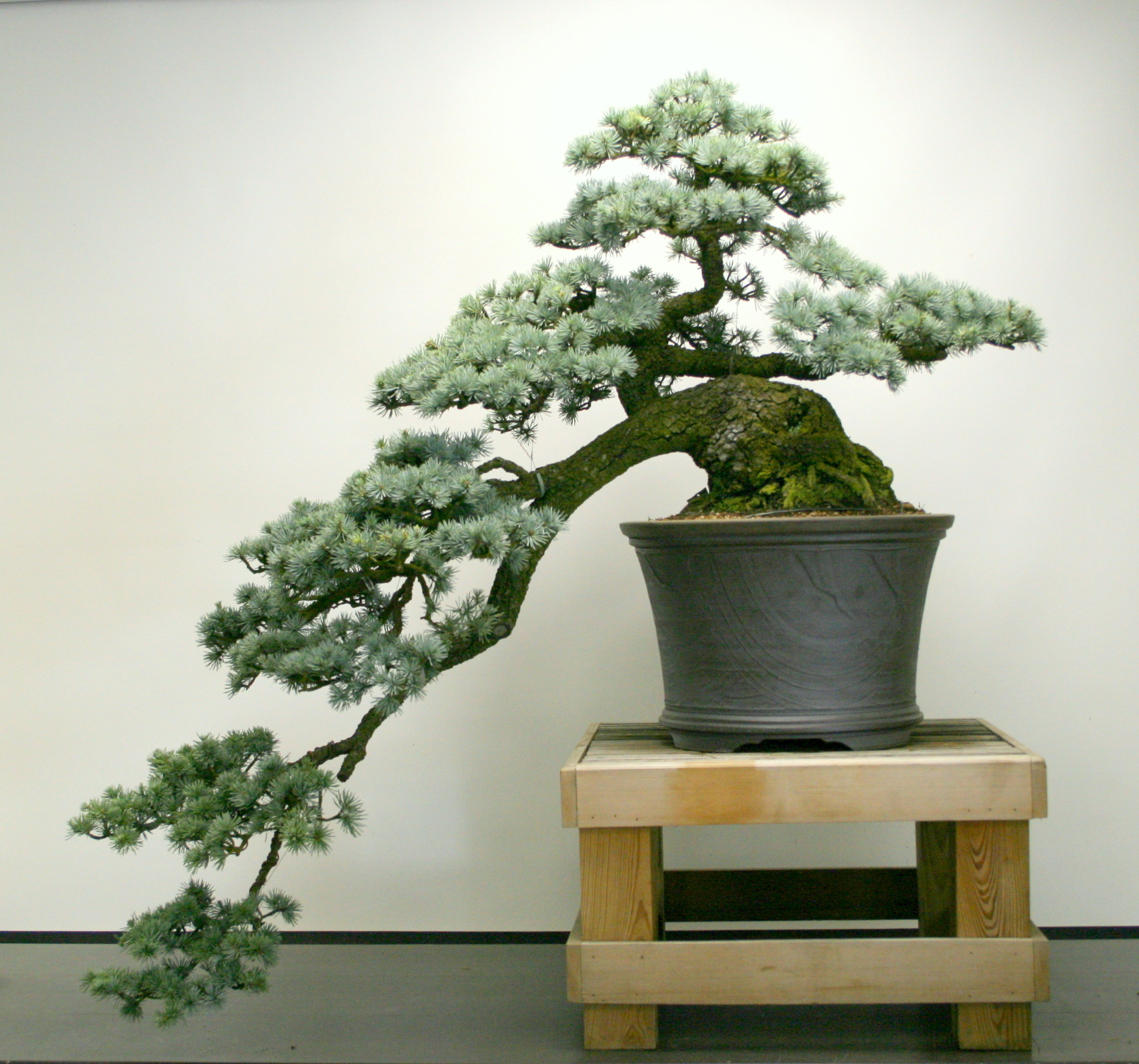
Cedrus atlantica Glauca Group
In training since 1960
Gift of Fred & Ernesta Ballard, 1990
This bonsai is trained in the cascade style, in which the tree is trained to imitate those growing from the side of a cliff. Instead of growing upward toward the sun, the trunk and branches are pulled downward by gravity.
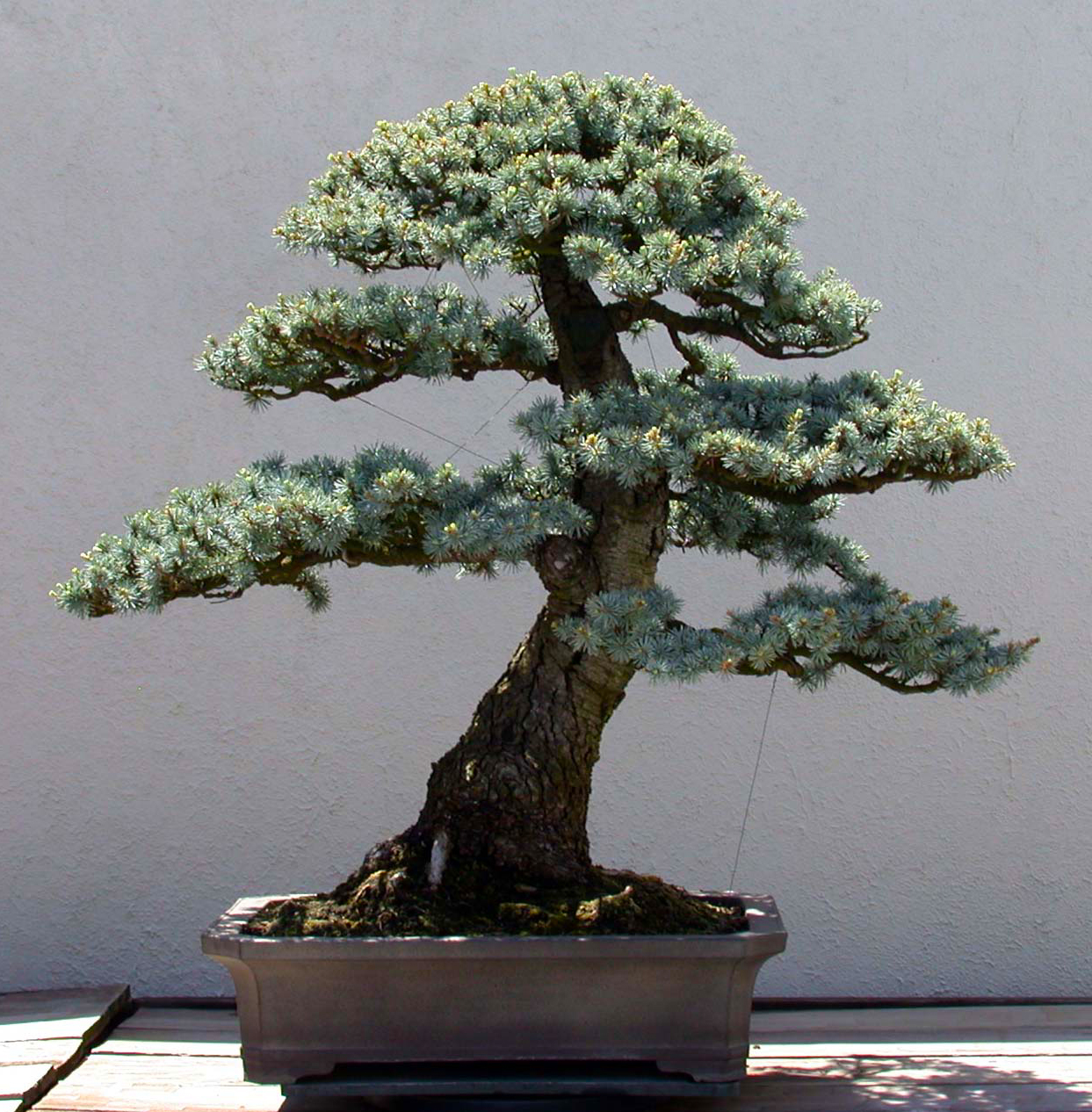
Cedrus atlantica Glauca Group
In training since 1948
Gift of John Yoshio Naka, 1990
One reason John Naka named this bonsai Gimpo, "Silver Phoenix," was because like the mythical bird rising from ashes, even the ugliest tree can become a majestic bonsai in the hands of a master.
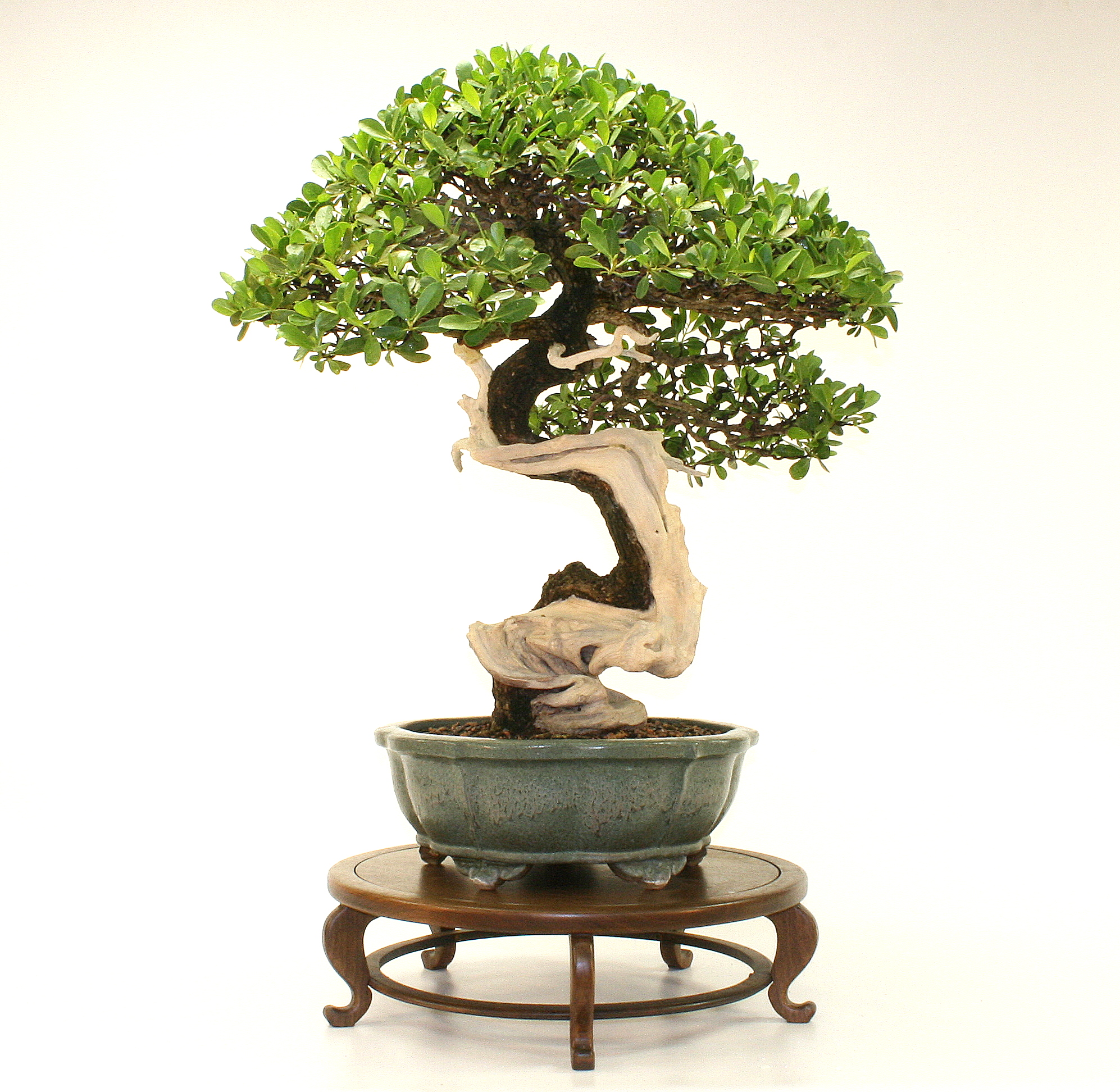
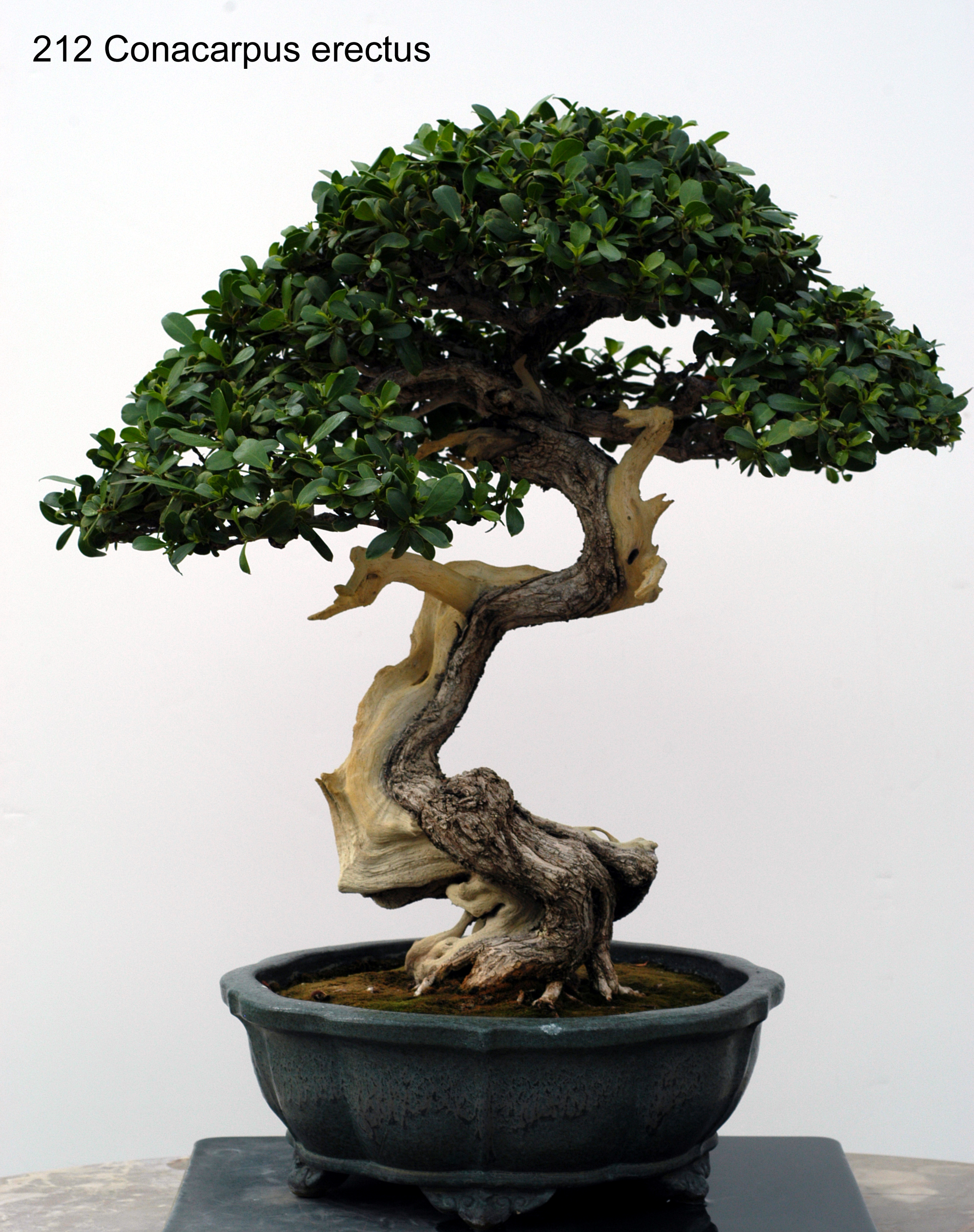
Conocarpus erectus
In training since 1975
Gift of Mary Madison, 1990
Buttonwood is a native American species from the swamps of Florida. Its naturally twisted trunks make it popular material for tropical bonsai.
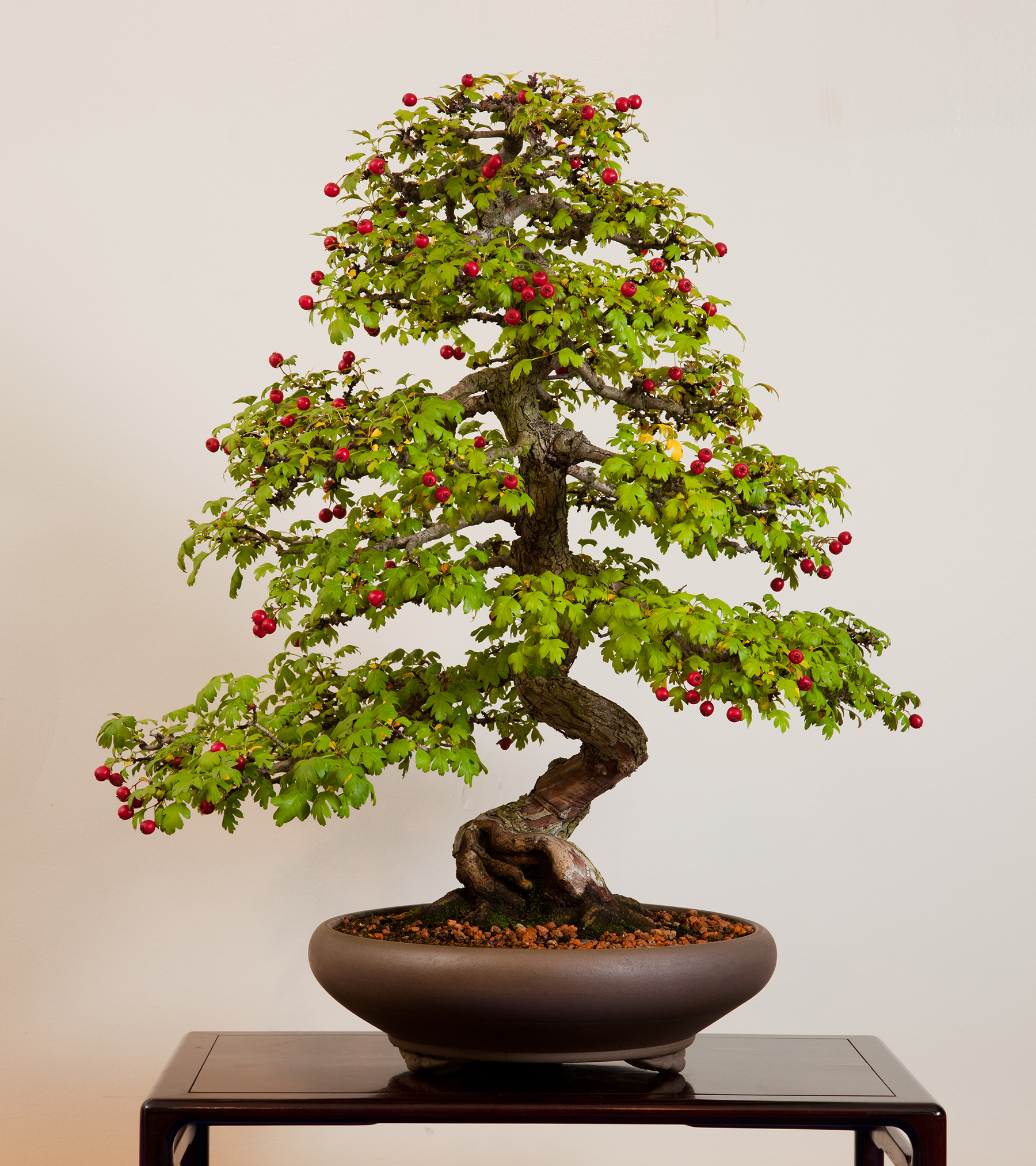
Crataegus laevigata
In training since 1955
Gift of Bertram F. Bruenner, 1990
The artist created the unique twisting trunk on this bonsai by shaping it with wire when it was still a seedling and very pliant. Once the tree matured, the wire could be removed.
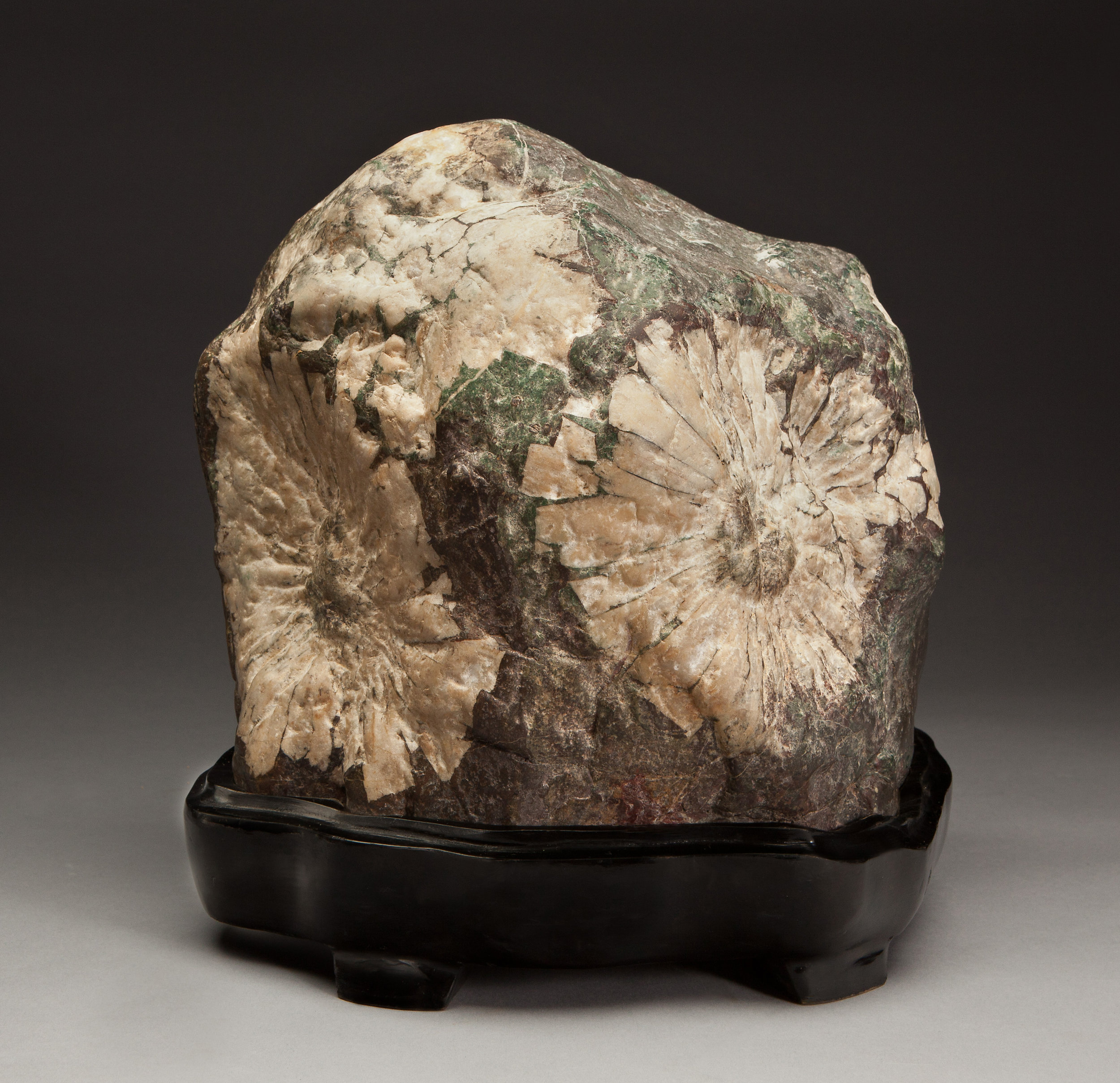
Neodani, Gifu Prefecture, Japan
Bicentennial Gift of Kiyoshi Yanagisawa, 1975
It may look like chrysanthemum flowers have been preserved in this stone; however, the "petals" are really crystals that formed before the surrounding mud hardened into a rock. This stone is unpolished.
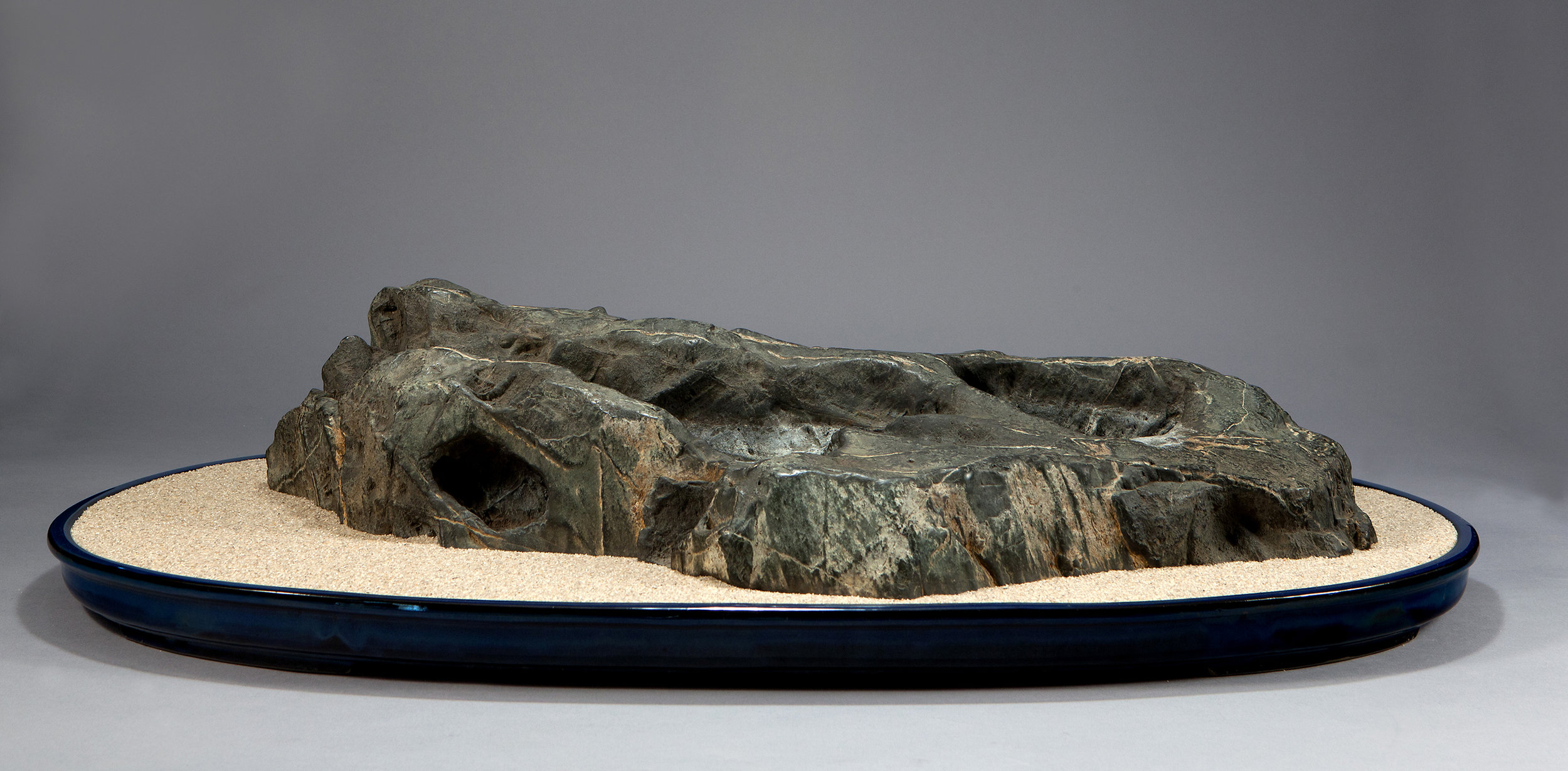
Sajigawa River, Tottori Prefecture, Japan
Bicentennial Gift of Teiichi Katayama, 1975
This stone recalls rocky coastlines with tidal pools. In Japan, important stones are given names by their owners. This one is called Jitsugetsutan, meaning "Pool of Eternity."
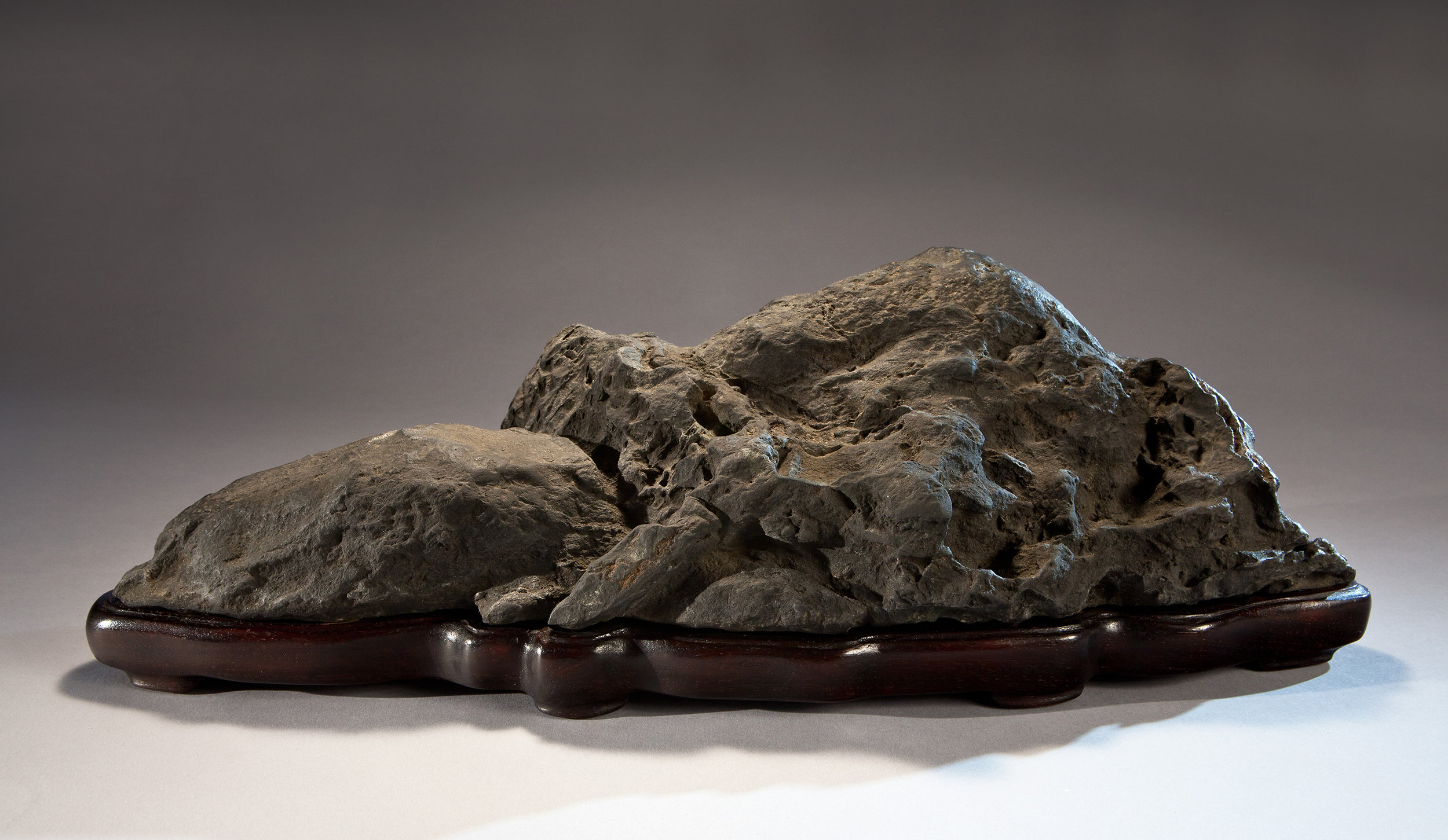
Ibigawa River, Gifu Prefecture, Japan
Bicentennial Gift of Osanaga Kanroji, 1975
Can you imagine hiking on the slopes of this gentle mountain stone?
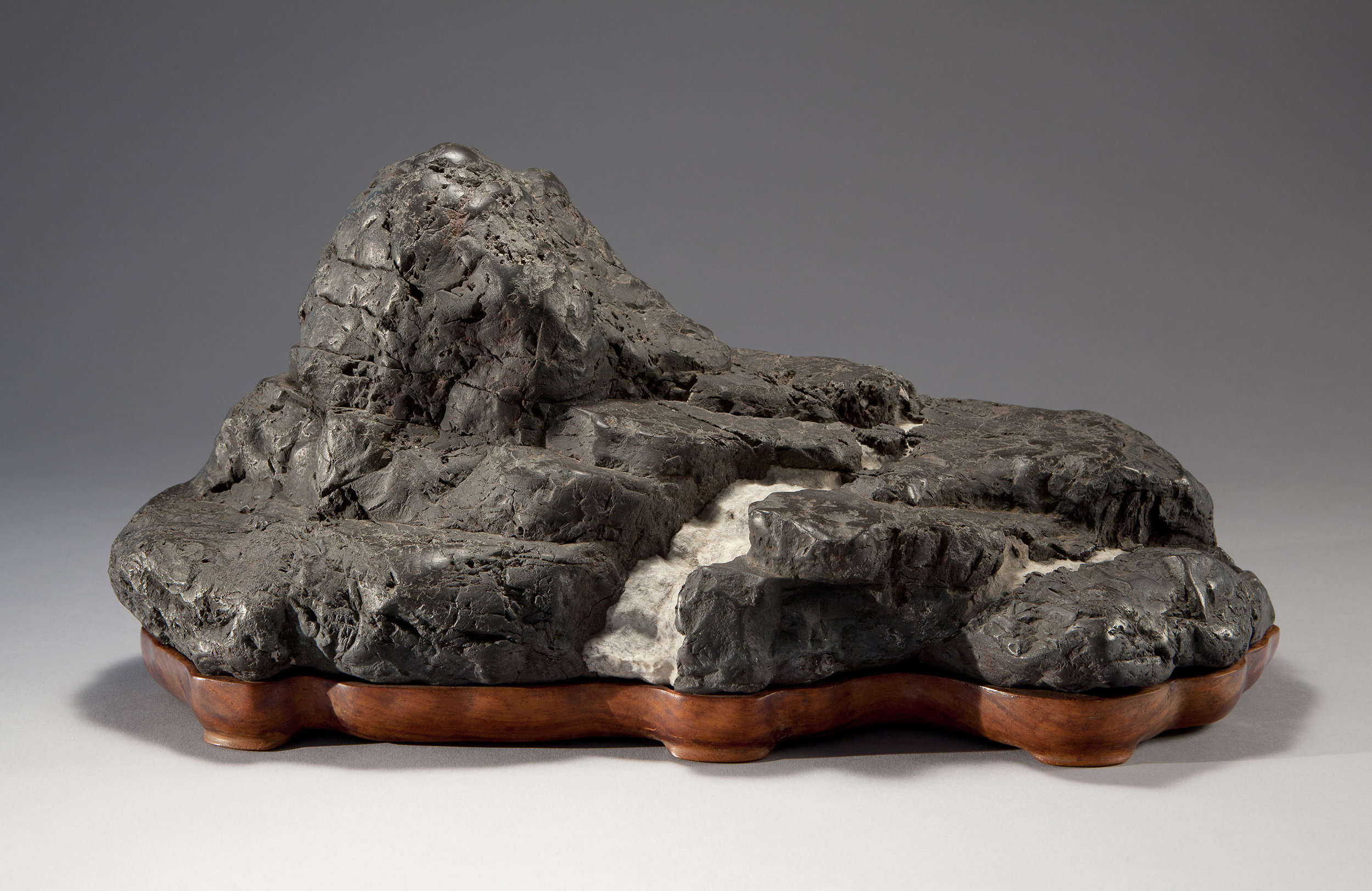
Kifune Shrine area, north of Kyoto, Japan
Bicentennial Gift of Kunizo Motoki, 1975
The vein of white crystalline material that occurs naturally in this rock gives the impression of a cool stream. The stone's name is Enkakeiryu, meaning "Misty Mountain Stream."
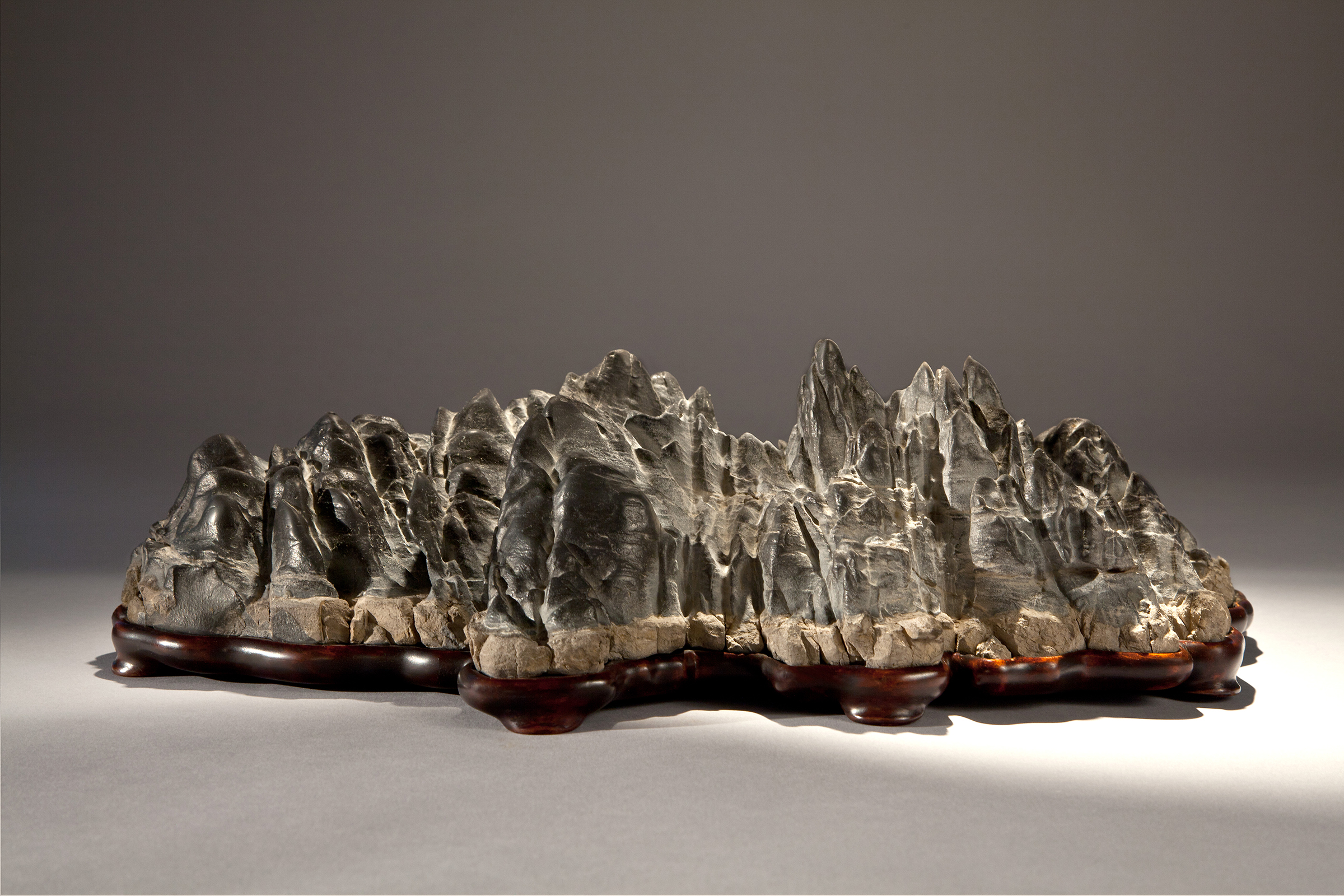
Seigaku, Shizuoka Prefecture, Japan
Bicentennial Gift of Fukujiro Yamagishi, 1975
The treacherous peaks of a rugged mountain range suggested by this stone bring to mind a wilderness untouched by man.
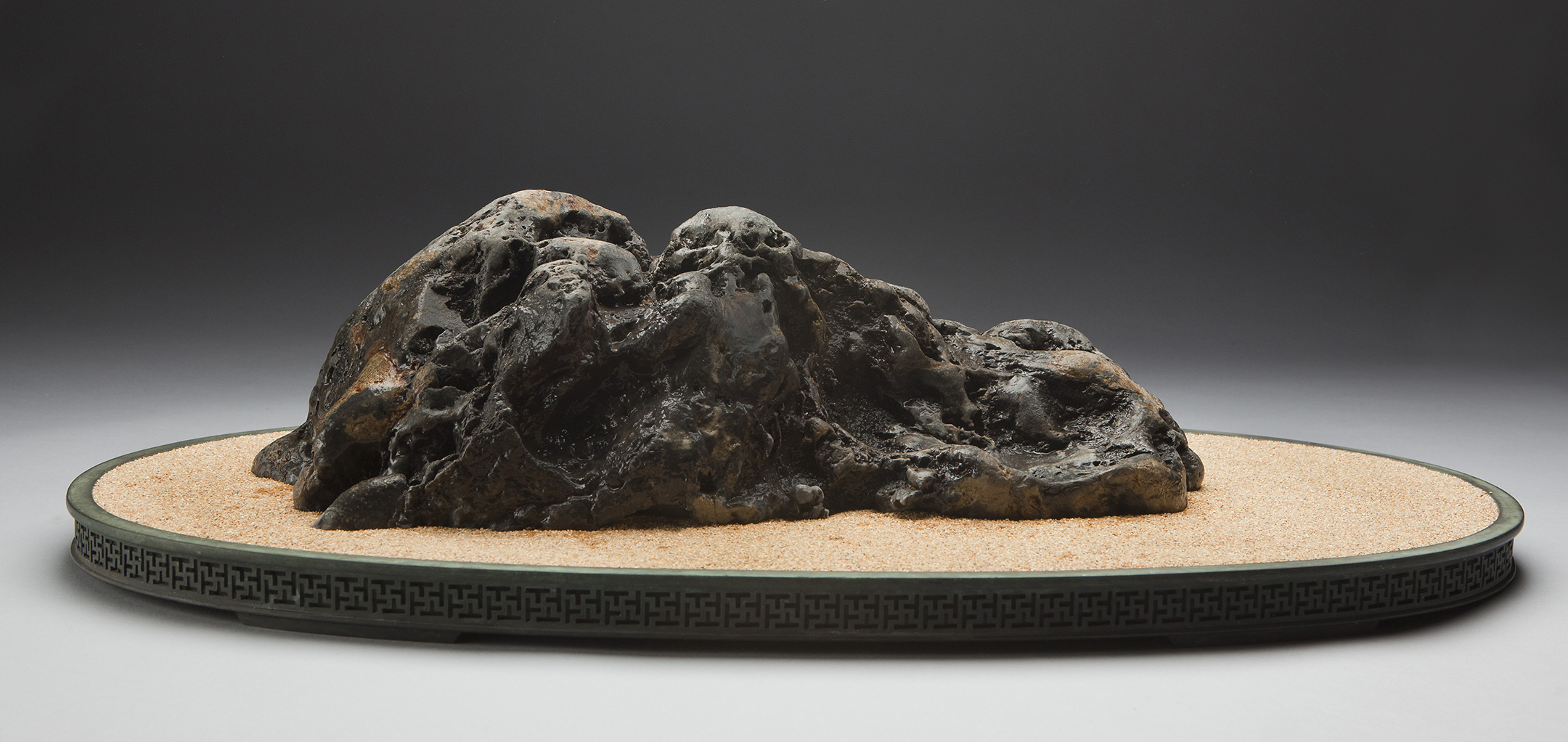
Hakkai Mountains, Niigata Prefecture, Japan
Bicentennial Gift of Katsura Suzuki, 1975
This stone was named Hakkaizan (Mt. Hakkai) because its silhouette resembles the actual mountain.
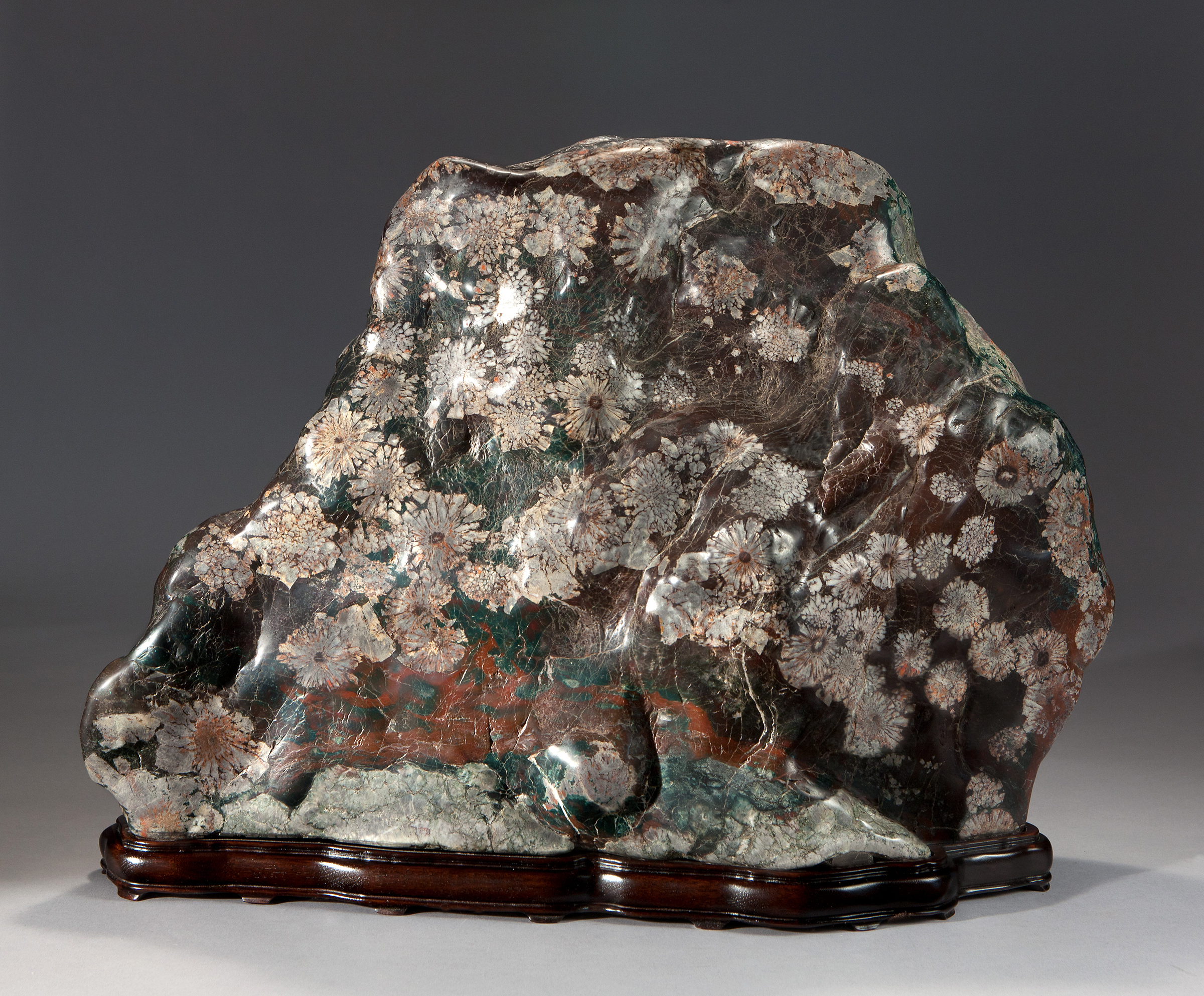
Neodani, Gifu Prefecture, Japan
Bicentennial Gift from the Nippon Suiseki Association (donated by Tanekichi Isozaki), 1976
A gift to President Ford from the Japanese viewing stone society in honor of the U.S. Bicentennial, this stone is well-known in Japan by its poetic name Tsukiyo Kiku, "Mums in the Moonlight."
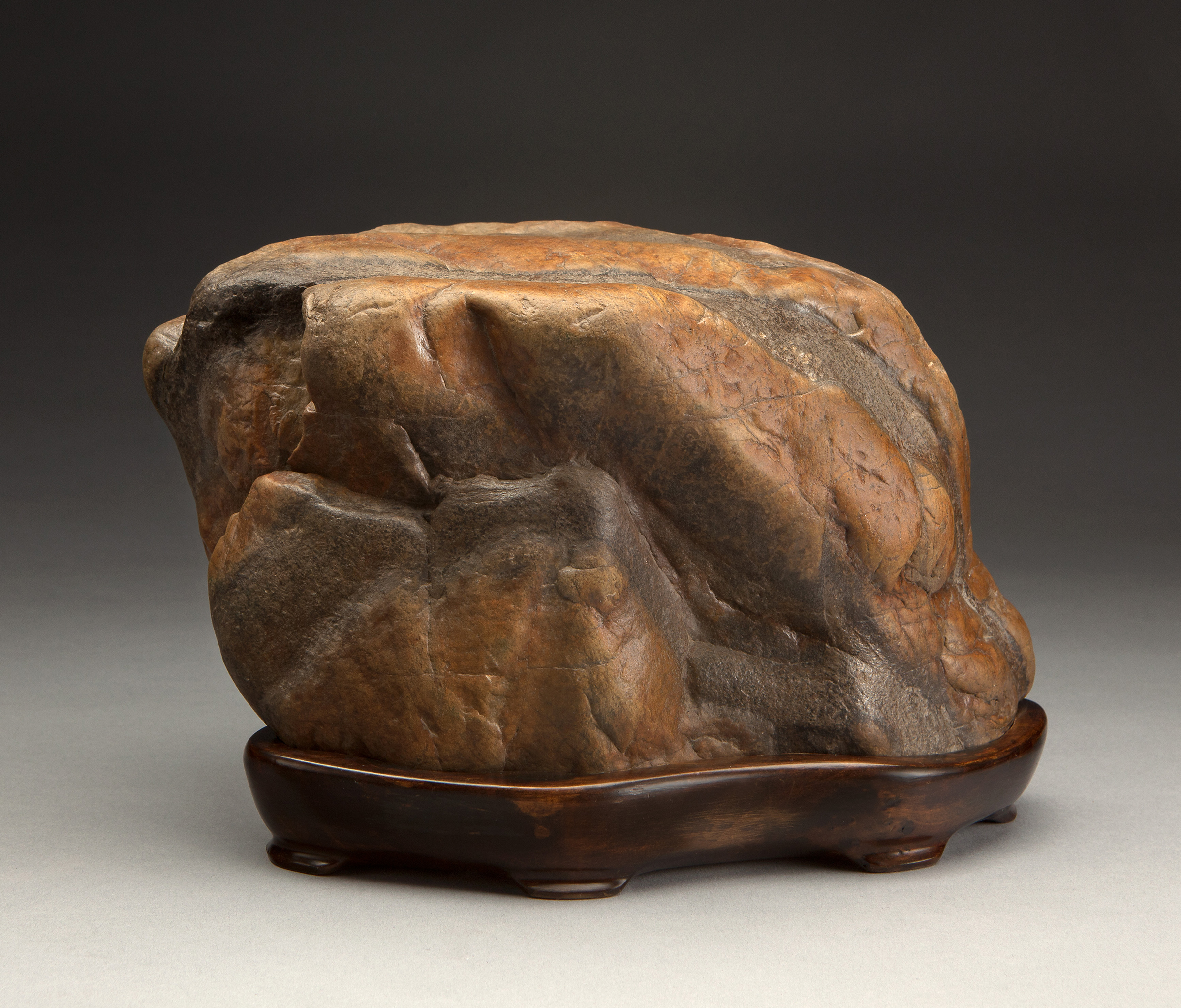
Setagawa River, Japan
Gift of Hiroshi Mitsuzuka, 1998
Striped stones from the Setagawa River are much prized in Japan for their pattern rather than their shape. This stone was a gift for President Clinton when he visited Japan during the Year of the Tiger.
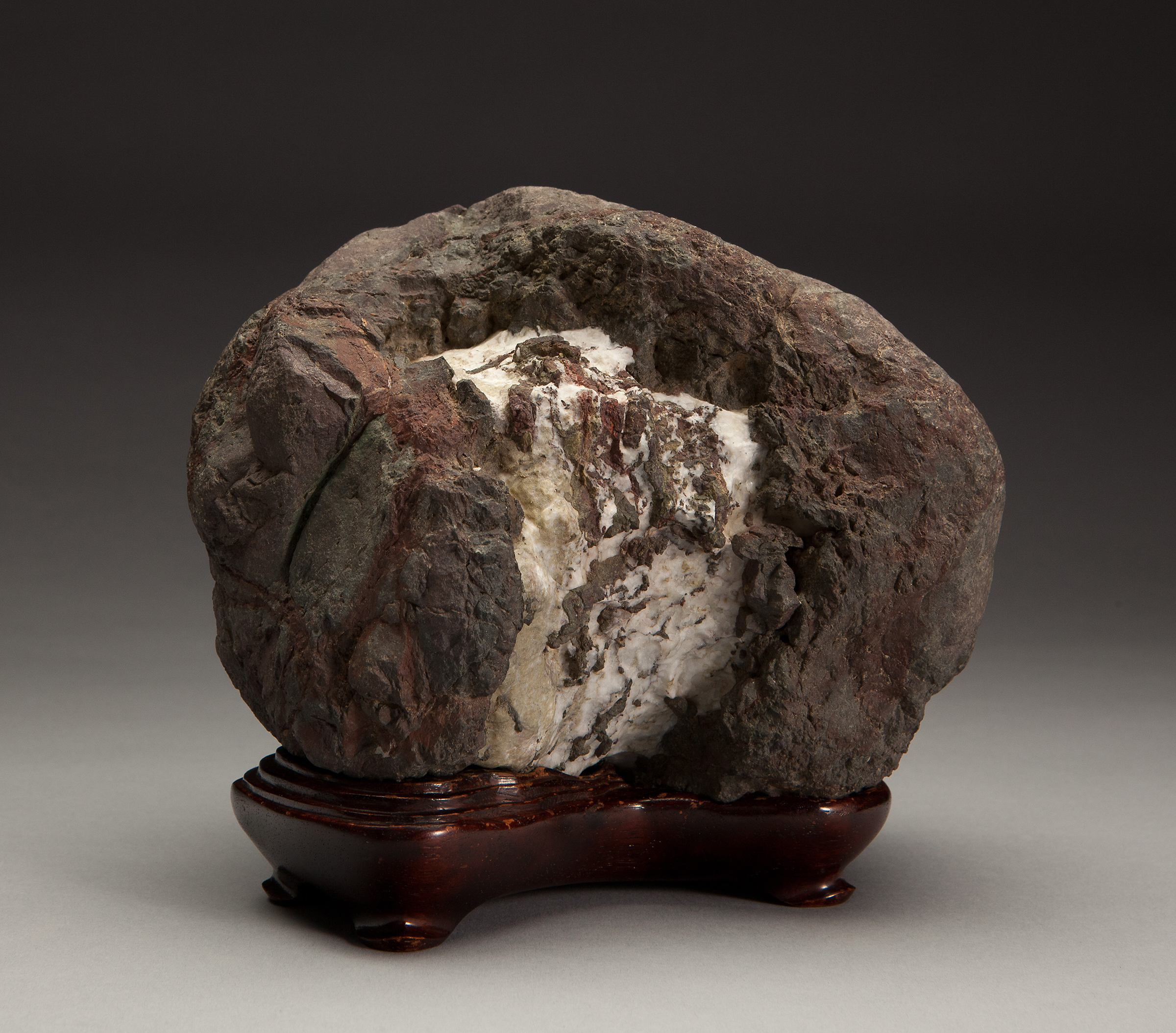
Abegawa River, Shizuoka Prefecture, Japan
Gift of Kenichi Oguchi, 2001
The natural white crystals in this rock give you the impression of water cascading down the mountain.
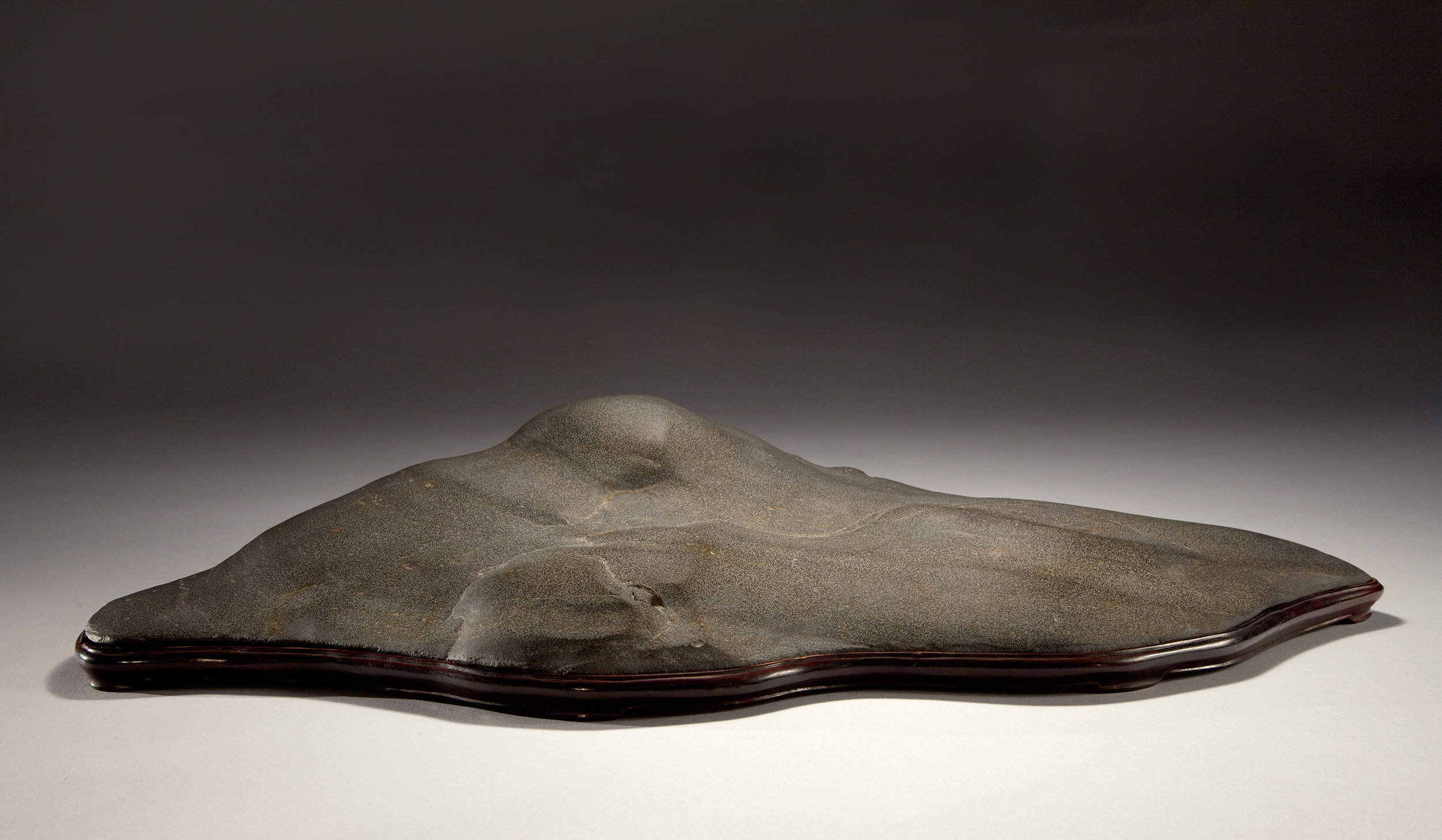
Setagawa River, Shiba Prefecture, Japan
Gift of Kenichi Oguchi, 2001
Mountains seen in the hazy distance lose their sharp features and can appear to be gentle rolling hills as in this stone.
Videos
Learn more about the National Bonsai Foundation and the National Bonsai & Penjing Museum and the collection through these beautiful videos.