Know Your Styles: A Guide to Bonsai Configurations

Walking through the Museum, you’ll find plaques with titles, donor names and dates next to most of the bonsai. But do you know how to tell which style our trees are exhibiting?

To help you wow friends on your next visit, Museum curator Michael James walked us through the main styles of bonsai on display in our pavilions: cascade, upright, root-over-rock, forest and windswept. James said these configurations simplify and categorize trees’ common forms or growth habits after enduring forces of nature – like wind, ice and snow – that shape trees in the wild.

“These are just styles that mimic what’s found happening in trees growing in harsh conditions,” he said.

The formal upright style is a simple design: the tree’s apex stands directly over the base of the trunk, and the tree is perfectly straight. James said the informal upright design is a bit looser and more whimsical than formal upright. The tree’s apex remains in line with the base of the tree, but the trunk twists and turns on its way to the top.

An informal upright bonsai.

An informal upright bonsai.

Forest style displays are created to mirror the different heights and trunk thicknesses found in natural forests, so the trees should differ randomly in size, James said. He added that the displays are usually arranged in odd numbers, ranging from about five to 11 trees.

A forest bonsai display.

A forest bonsai display.

Seeds that land on a small patch of fertile soil germinate and send roots down into the earth to create a tree. But over the years that bit of soil can erode, exposing the rock underneath where the tree began to grow. This process creates the root-over-rock look.

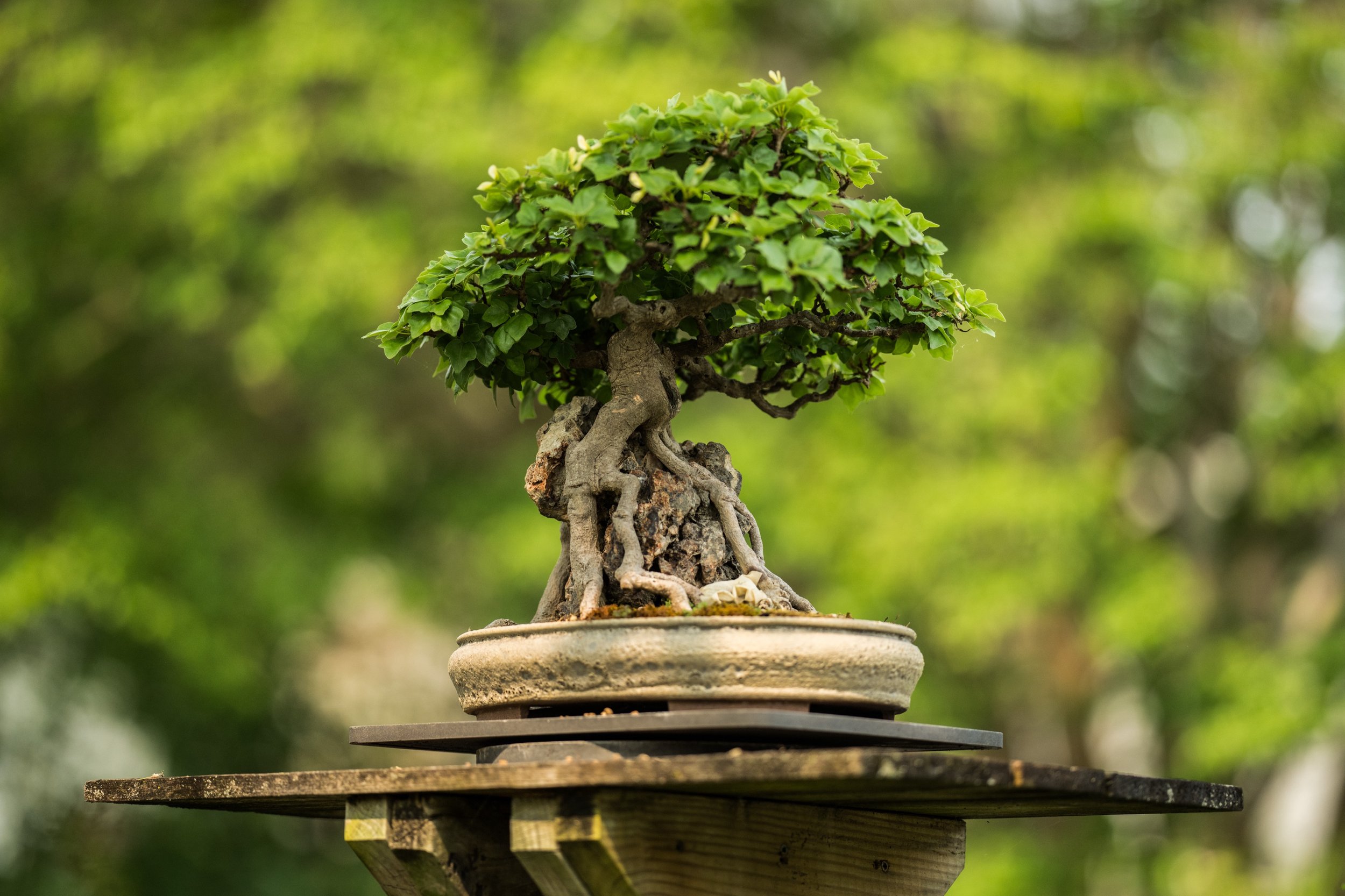
A root-over-rock style bonsai.

A root-over-rock style bonsai.

To replicate this style, bonsai masters will plant a bonsai on top of a rock. In some plantings, the masters attach the bonsai to the rock with wires and the tree lives entirely on the rock, growing in a special soil mix.

In other cases, as the above picture demonstrates, the rock and attached tree are planted in a container filled with soil, and the bonsai roots grow into the soil. In this instance, each time the bonsai is repotted, the master may lift the rock and attached tree higher in the container and remove some of the soil, exposing more of the roots and the rock.

A full-cascade bonsai.

A full-cascade bonsai.

Bonsai in the cascade style also come in two configurations. In the semi-cascade design, the trunk of the tree might lean over and drop below the lip of its pot. But the tip of bonsai in full-cascade reaches below its container, to emulate a tree clinging to a cliffside.

A bonsai in the windswept style.

A bonsai in the windswept style.

The Museum has one tree that displays the windswept look: the iconic Chinese elm. Branches of windswept bonsai grow in one direction and look as if the tree is growing while enduring a strong wind blowing from only one side.

James said some styles are more common in certain trees, but many trees can be trained into myriad configurations. One exception is with cascade bonsai. Trees in the cascade category are often flowering trees or conifers, like pines and junipers, which are found in mountainous areas. Their low hanging branches are pulled down by the weight of fruit or snow and ice that accompany high-altitude conditions, creating the cascade look.

He added that some styles fit specific occasions, as certain designs are more formal than others.

“If you were displaying a bonsai for a special occasion you would use a formal tree, which would be very stately, maybe austere – very proper,” James said. “But an informal tree lends itself more to having a party or a big celebration. Something fun, maybe even more playful.”


Looking to learn even more about bonsai, and get your hands-on experience while doing it? Join our Museum Staff and Volunteers as they offer several Intro to Bonsai classes this July. Learn more here.
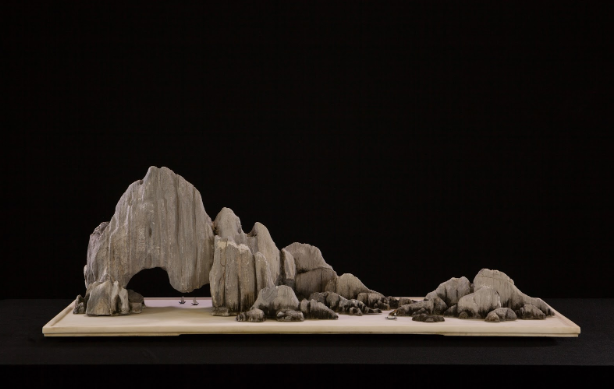

HISTORICAL TREE SPOTLIGHT: “Spring Rain” Stone Penjing

Screenshot 2019-06-17 at 12.58.47 PM.png

When thinking of bonsai or penjing, one naturally imagines perfectly manicured trees. But in this month’s Historical Tree Spotlight, we’re shifting gears and taking a look instead at a unique stone presentation called “Spring Rain.” Museum curator Michael James says the rocky display exemplifies a fundamental difference between bonsai and penjing.

“Penjing, in the literal translation, is more of a theme or a landscape in a shallow container, whereas bonsai is really the minimalist, iconic tree we all know,” he said.

A gift from the Shanghai Botanical Garden to the Museum in 2006, “Spring Rain” is usually on display during the summer months in the Chinese Pavilion.

The penjing sits in a nearly five-foot tray crafted from white marble – a prolific resource used often in Southern China – which is meant to portray the surrounding sea. Its jutting landscape is a representation of a UNESCO World Heritage Site composed of a group of land masses protruding from Halong Bay in the South China sea.

Screenshot 2019-06-17 at 12.58.58 PM.png

Although “Spring Rain” represents a physical place on Earth, James said penjing are not always crafted to resemble real locations. The displays are often created as a poetic representation of an imaginary world or whimsical place.  

“With some of the other penjing we have in the Museum, the trees are so curvy they don’t even look the way trees naturally grow,” he said. “But they do look like an amazing place to be if you were miniaturized in that setting.”

Screenshot 2019-06-17 at 12.59.10 PM.png

According to James, the small boats under the main rock signify another capital difference between bonsai and penjing. The tiny pewter or ceramic figurines are accents used in penjing to create a humanistic scale. James said the presence of greenery is minimal in penjing, and the lack of plants in “Spring Rain” speaks to the minimalistic approach of the art.

He added that penjing artists use a freeform “clip-and-grow” method, rather than training the trees with wire, to redirect the trees’ energy into the desired form.

“With penjing, artists and creators allow the tree to do more of what it does naturally,” James said.


The Museum is Alive with the Sound of the National Symphony Orchestra!

(L-R) Janice Vitale (NBF Board Member), Amy Grossnickle (Kennedy Center), NSO Musicians, Johann Klodzen (NBF Executive Director) posed with the Juniperus chinensis var. Itoigawa (donated by the Kennett Collection).

(L-R) Janice Vitale (NBF Board Member), Amy Grossnickle (Kennedy Center), NSO Musicians, Johann Klodzen (NBF Executive Director) posed with the Juniperus chinensis var. Itoigawa (donated by the Kennett Collection).

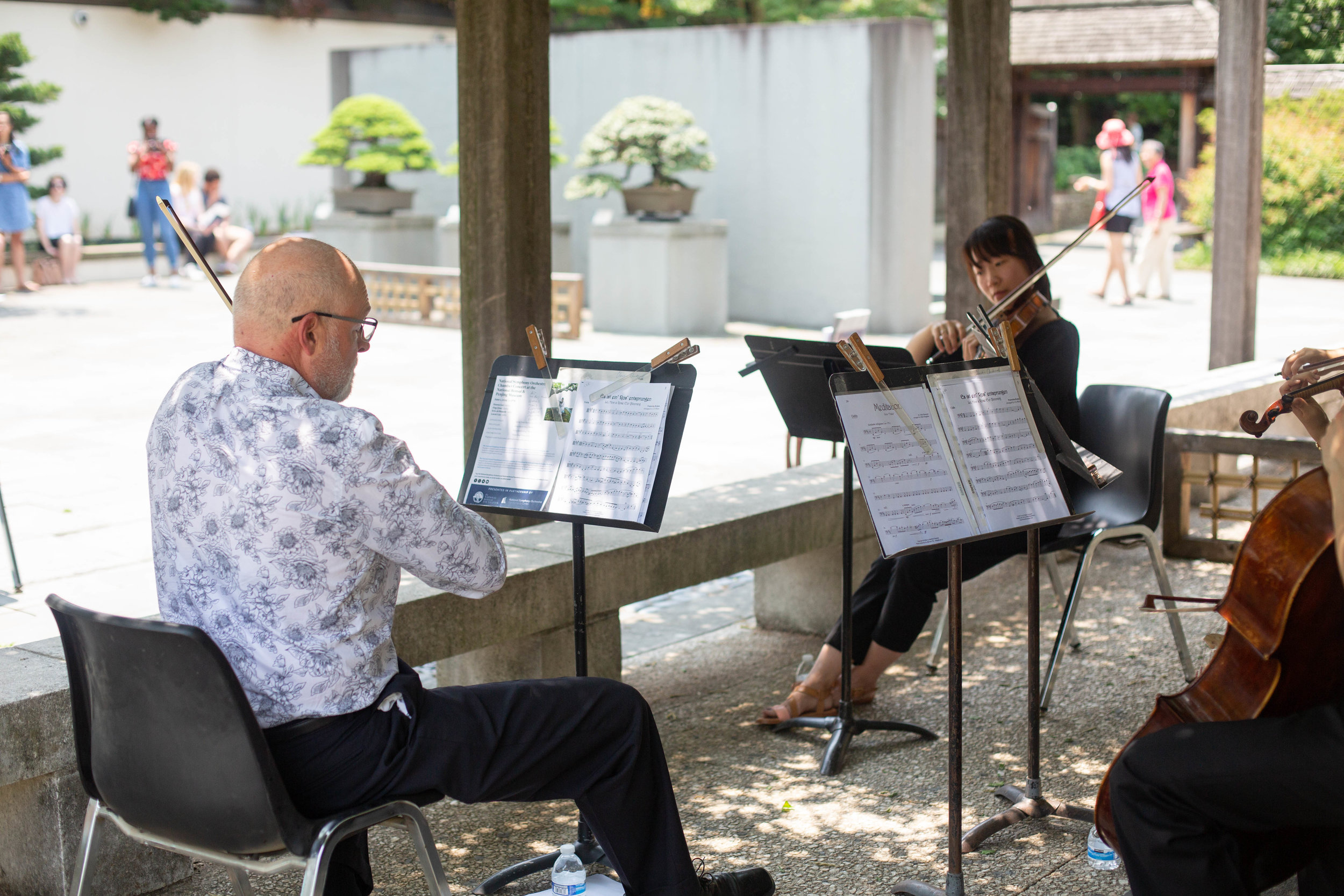
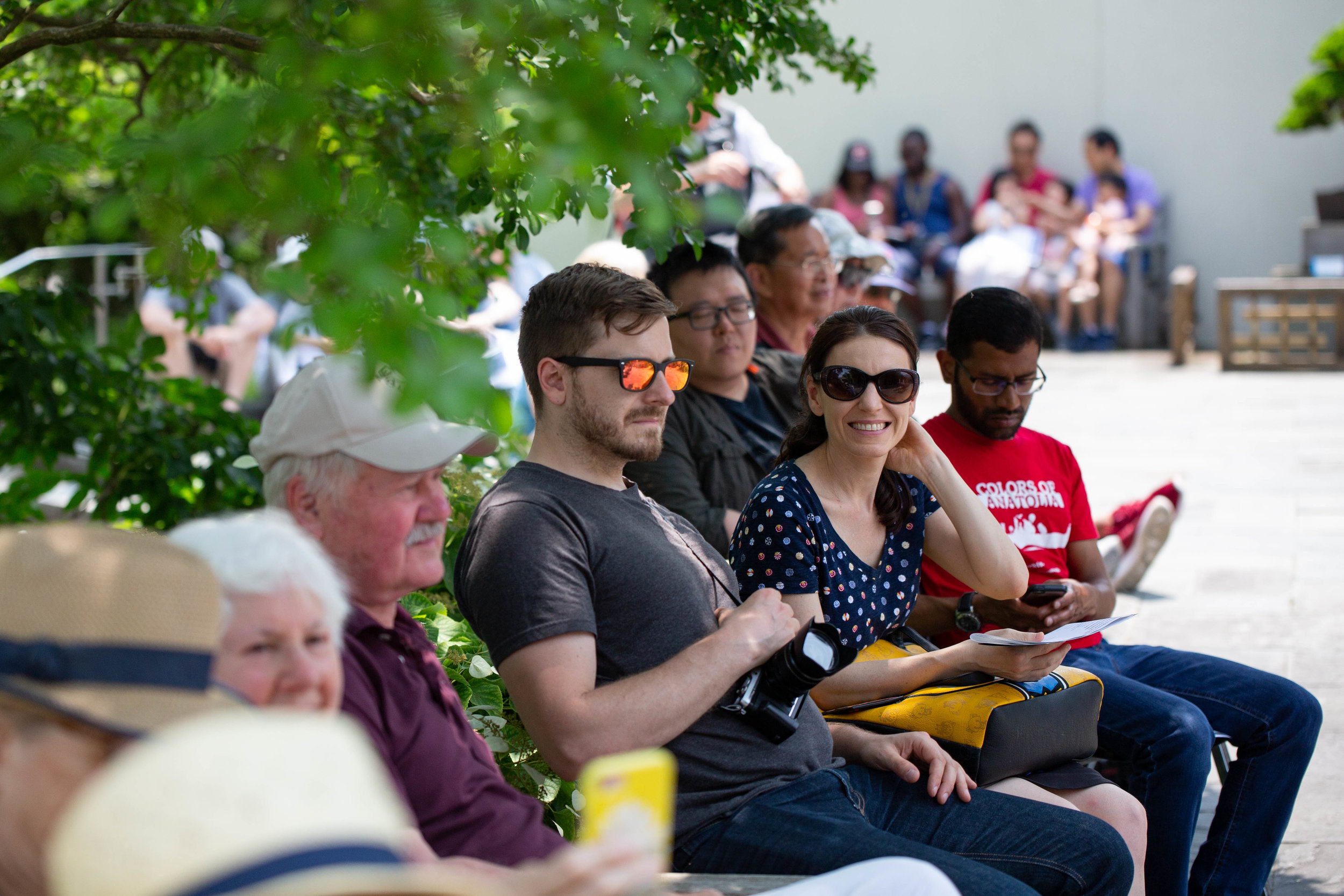
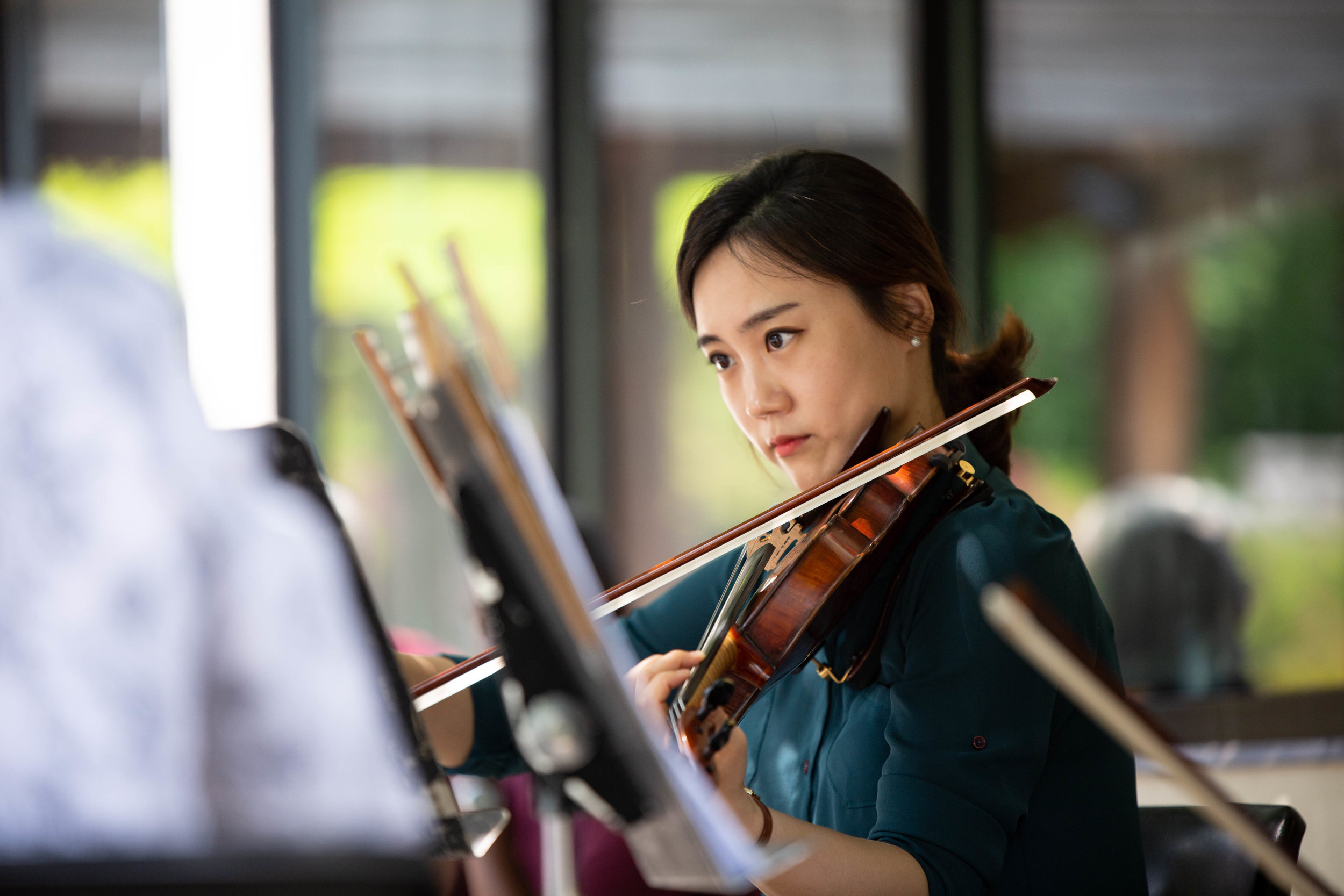
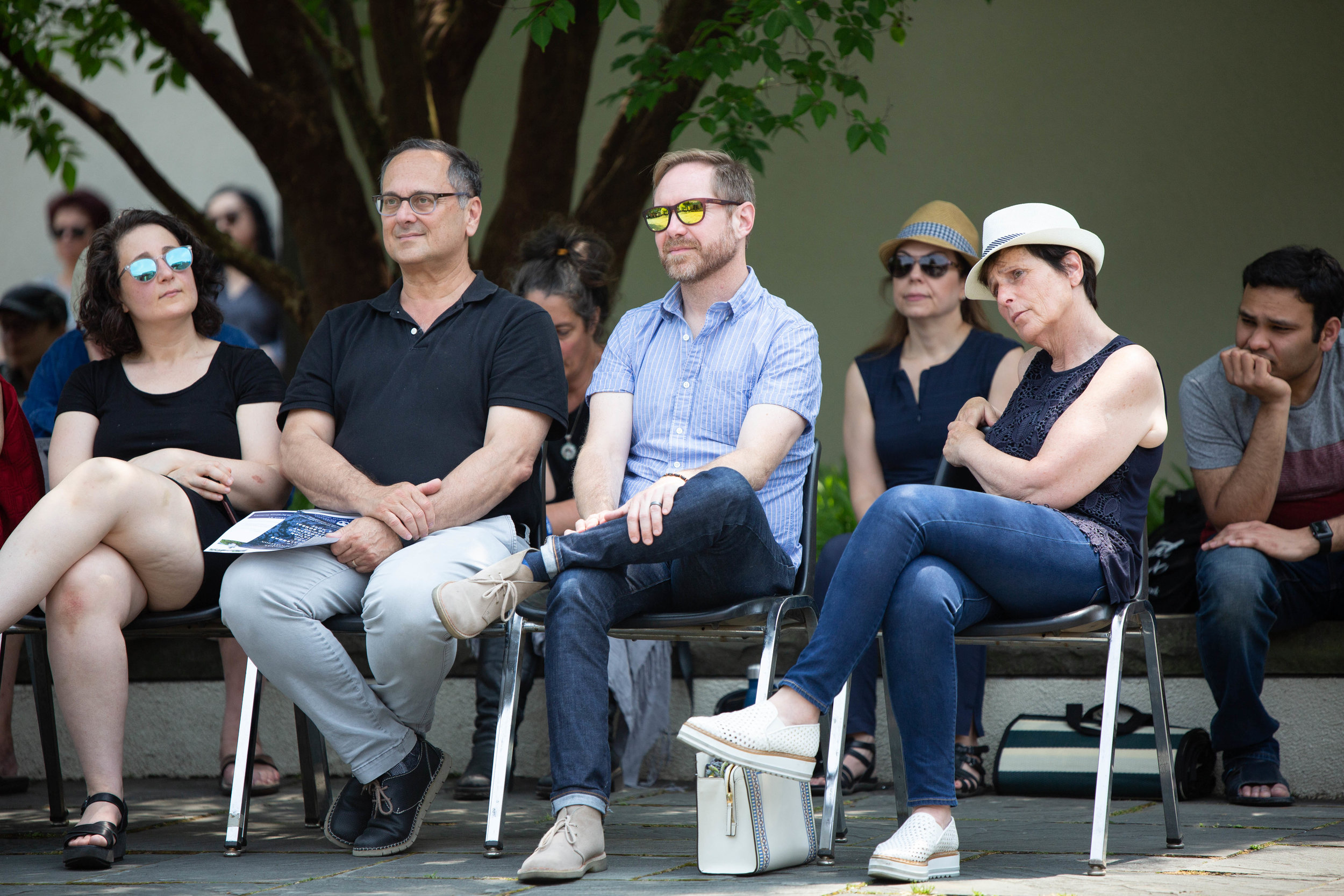
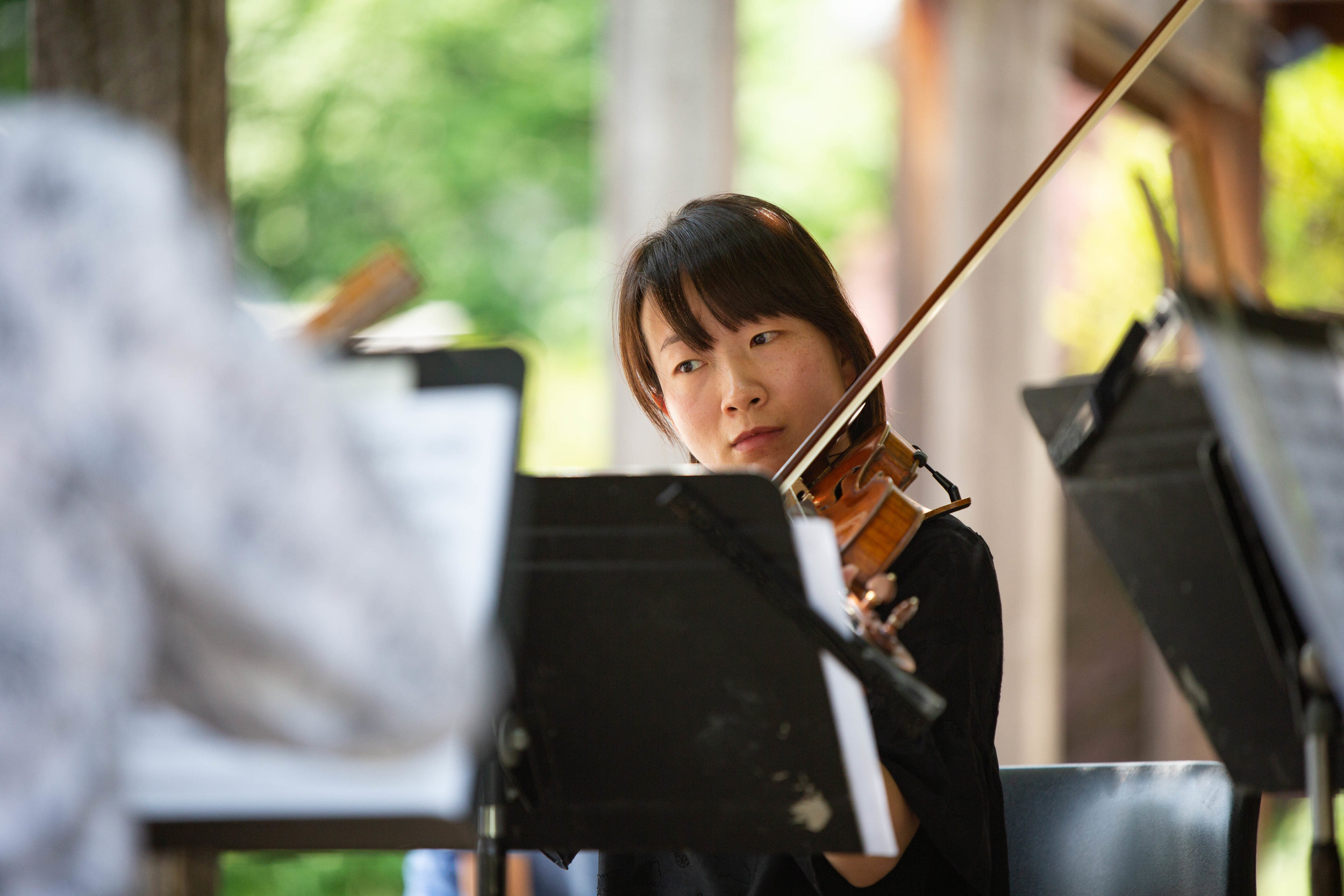
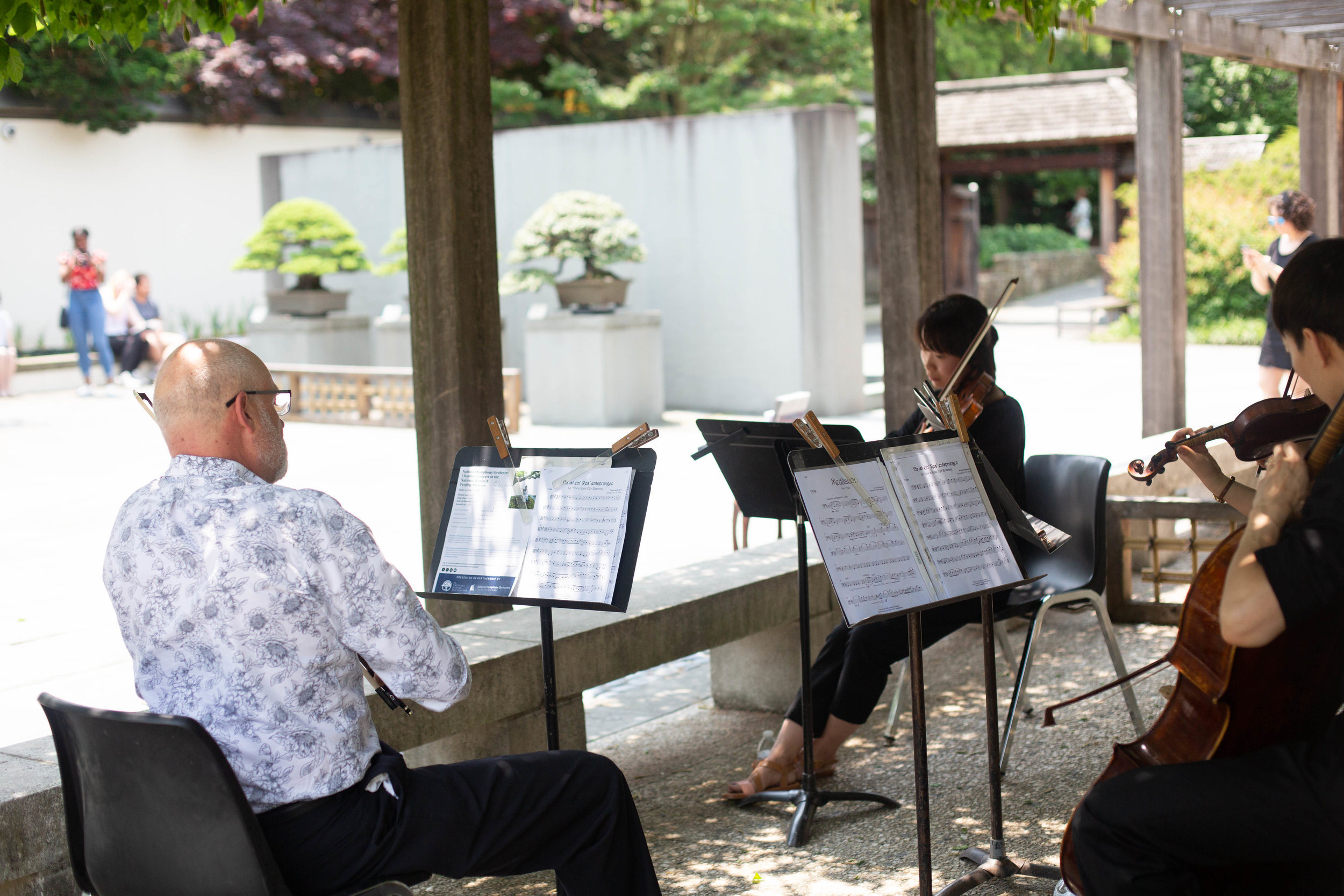
It was a great honor to have the National Symphony Orchestra perform a Chamber Concert at the National Bonsai & Penjing Museum on Saturday, June 1st in the Upper Courtyard.

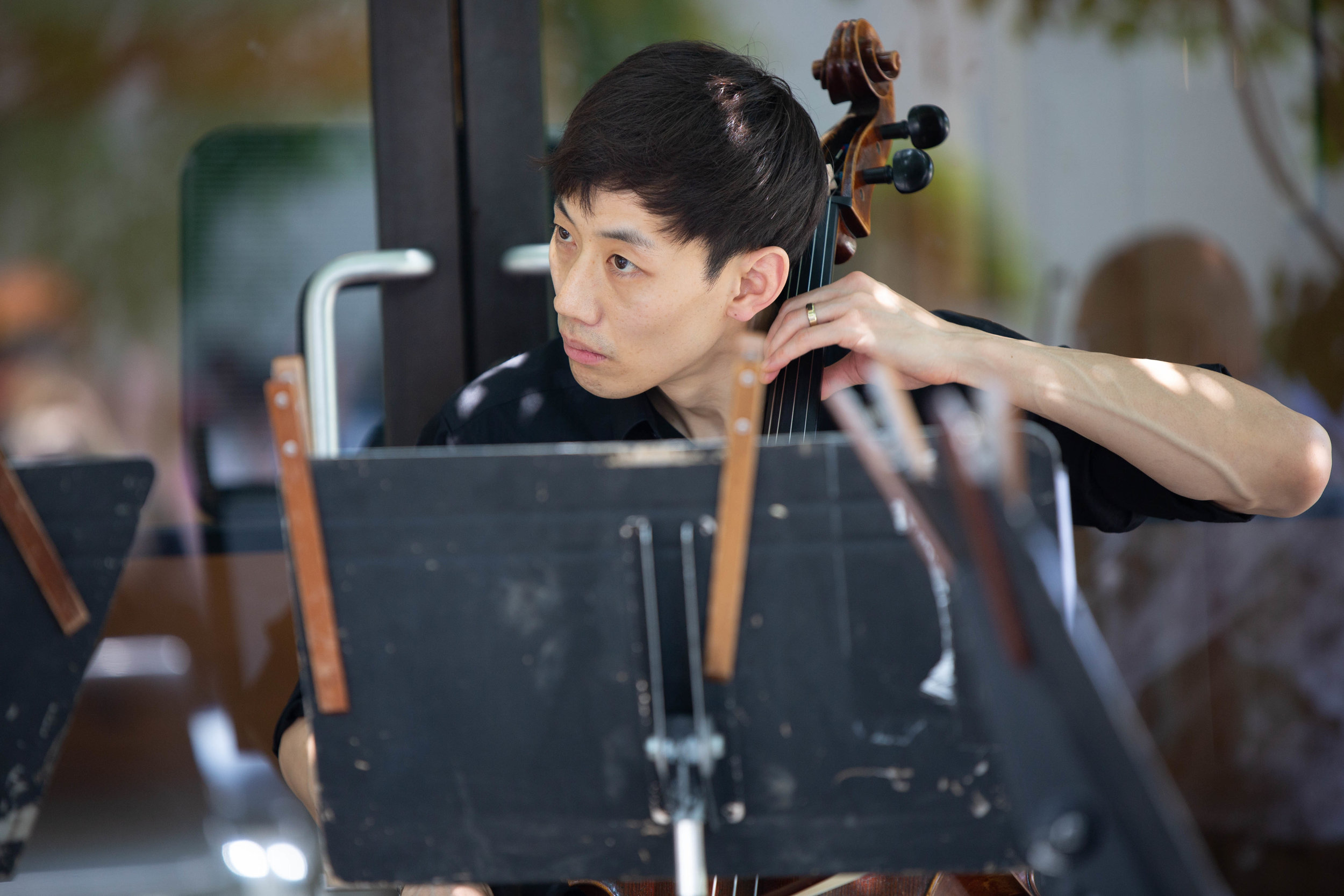
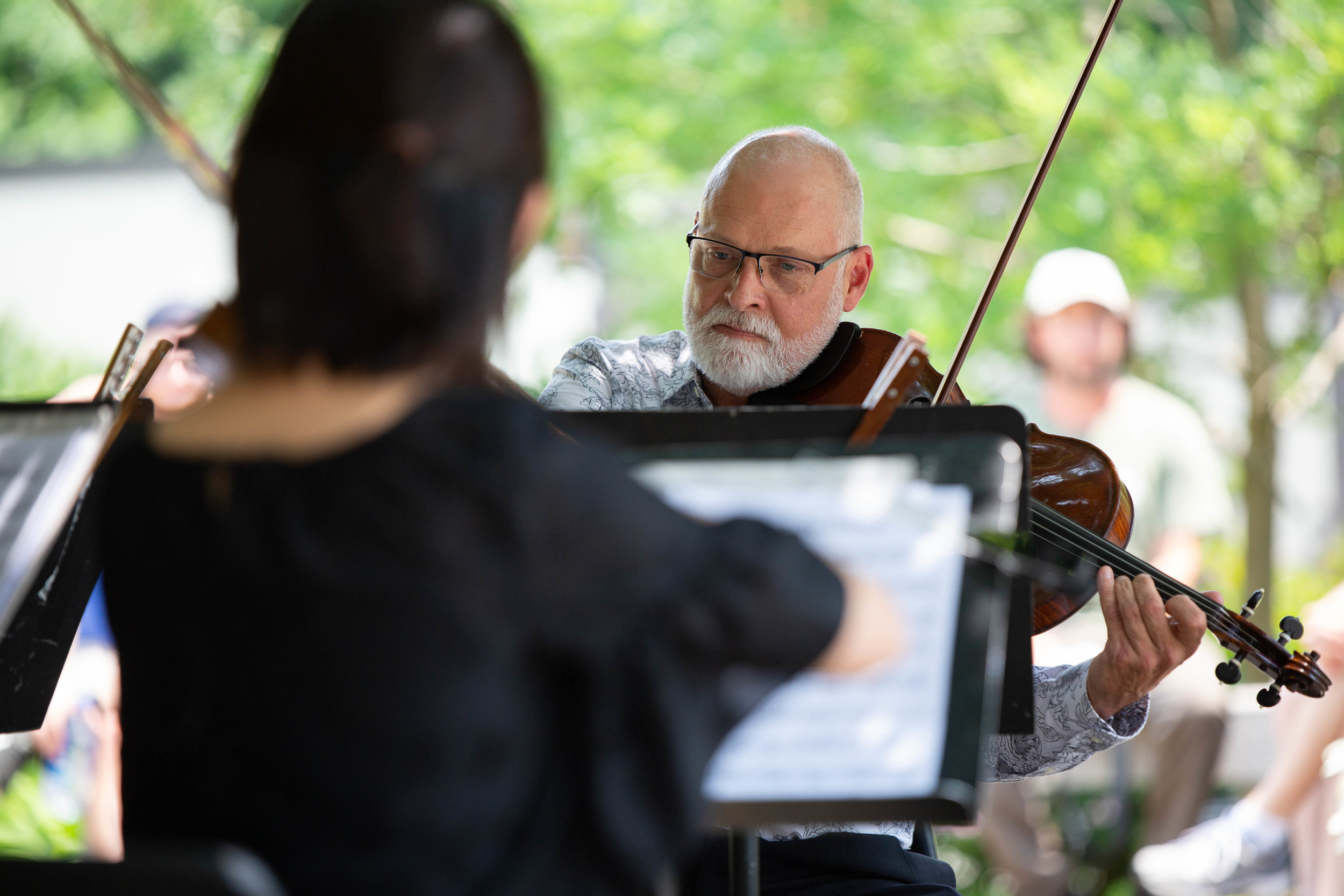
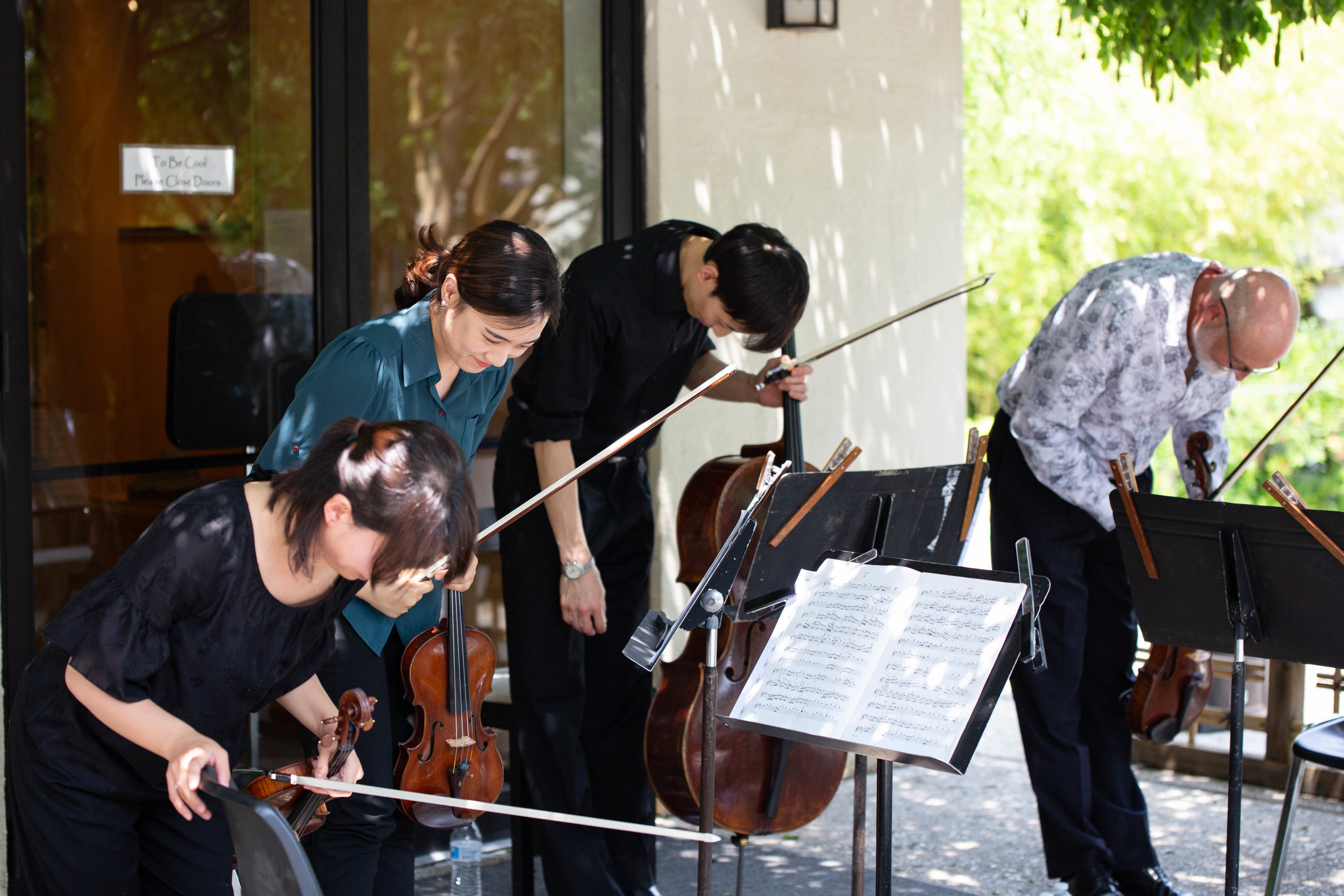
The quartet, made up of National Symphony musicians Hanna Lee and Jing Qiao (violin), Eric deWaardt (viola), and Loewi Lin (cello) treated the crowd of nearly 70 visitors to a range of compositions from Vivaldi to Glass, all inspired by nature and/or Asian culture in someway to match the beautiful setting.

Jack Sustic, NBF Co-President welcomes the crowd.

Jack Sustic, NBF Co-President welcomes the crowd.

Jack Sustic, National Bonsai Foundation’s Co-President, was there to welcome and introduce the program. Board Member, Jim Hughes, and Janice Vitale were also there. The free program was a huge success, with many of the visitors asking for more programming like it in the future.


Read an interview we did with the musicians before the concert here.


We Won Washington City Paper’s “Best Place to Take An Out-Of-Towner” Best of DC Award For Second Year in a Row

FB_Best Place to Take..._.png

We are thrilled to announce that The National Bonsai & Penjing Museum has clinched the “Best Place to Take An Out-of-Towner” award in the 2019 Washington City Paper BEST OF DC Readers’ Poll.

We would like to thank all of the visitors and followers who voted for us in the poll. We are grateful for all of your support throughout the year, and we hope you continue to enjoy our collections, exhibits and events.

We Celebrate World Bonsai Day

Michael Hagedorn leading a presentation during live bonsai demonstrations (Photo courtesy of Michael James)

Michael Hagedorn leading a presentation during live bonsai demonstrations (Photo courtesy of Michael James)

On May 11th, bonsai enthusiasts and admirers of the art gathered at bonsai centers around the globe to celebrate World Bonsai Day. The celebration pays homage to the vision of the founders of the World Bonsai Friendship Federation who believed  in the power of bonsai to promote friendship and goodwill throughout the world.

Photos courtesy of Olivia Anderson

Photos courtesy of Olivia Anderson

We spoke with Museum intern Andy Bello about World Bonsai Day at The National Bonsai & Penjing Museum and the huge impact that celebrating the small trees can have.

The Museum recognized World Bonsai Day with Michael Hagedorn, a bonsai expert who traveled from Portland, Oregon to give pruning demonstrations and lectures and sign his book, “Post-Dated: The Schooling of an Irreverent Bonsai Monk.”

Photo courtesy of Michael James

Photo courtesy of Michael James

According to Bello, visitors filed into the Museum’s auditorium on the morning of the 11th to listen to Hagedorn’s lecture on common bonsai care and technical myths that his soon-to-be-published book “Bonsai Heresy” addresses. For example, Hagedorn untangled the common misconception that one should lay off nitrogen fertilizers in autumn when leaves begin to fall off trees.

Bello said some believe adding nitrogen –  a macronutrient involved in leaf growth – to the soil when trees’ leaves will soon fall off anyway simply wastes resources. But Hagedorn found that, as temperatures begin to drop in the fall, nitrogen fertilizer will not encourage a new flush of foliage unless the weather became unseasonably warm.

“The nitrogen will actually make the tree a little bit healthier throughout the winter season,” Bello said. “When spring comes you already have that nitrogen there, rather than just giving it a big flush of nitrogen right in the spring, there’s a kind of continuous buildup.”

After signing copies of his book, Hagedorn held a demonstration, during which he profiled the technical care and traits of five trees of various species and growth habits. Bello said Hagedorn and Museum volunteers took turns working on the trees in front of about 70 attendees!

“It was just a lot of good information on what to do when spring pests come up or fungal issues come up, especially here in D.C., when the rains start to pick up again and how to take preventative measures for that with different species as well,” Bello said.

He said World Bonsai Day celebrators – consisting of people of all ages and levels of interest in bonsai, including some who had never practiced before – most enjoyed Hagedorn’s demonstration, where they learned answers to questions like, “How are these trees maintained?” and “How are the trees kept so small?”

Michael Hagedorn presenting (Photo courtesy of Michael James)

Michael Hagedorn presenting (Photo courtesy of Michael James)

“People think that the trees just grow this way, but they really take a lot of work to prune back and maintain,” Bello said.

Bello said World Bonsai Day not only provides a forum to appreciate and recognize bonsai, but also promotes the trees to those in the general public who are not as familiar with the ancient art. He added that World Bonsai Day emphasizes the unity of all countries that practice bonsai, especially at the Museum, which has deep connections to Japan.

NBF board member and Vice President, Marybel Balendonck, holds microphone as Michael Hagedorn works on the tree that she donated to the Museum. (Photo courtesy of Michael James)

NBF board member and Vice President, Marybel Balendonck, holds microphone as Michael Hagedorn works on the tree that she donated to the Museum. (Photo courtesy of Michael James)

“Here at the Museum you can walk through and see trees from different parts of Japan, North America and China and see how different cultures taken similar approaches,” Bello said.

National Symphony Orchestra to Perform at The National Bonsai & Penjing Museum

NSO.png

Classical music can often conjure up images of nature with just a simple melody. But on June 1st, visitors to the National Bonsai & Penjing Museum can simultaneously enjoy nature and music at a National Symphony Orchestra quartet performance in the Museum’s courtyard.

We interviewed the members of the quartet about the connection between music and nature and how the group’s visit to the Museum immediately enticed them to play at one of “D.C.’s hidden gems.”

The group said that the NSO had been in talks with the National Bonsai Foundation about the possibility of performing about one year ago, but they were officially sold on the idea of a concert after a trip to the Museum themselves.

“Once you step into the Bonsai Museum, you feel transported miles away from the city and the NSO hopes this performance at the Museum can have a similar transformative effect on listeners,” one of the group’s musicians said.

The quartet consists of violinists Hanna Lee and Jing Qiao, violist Eric deWaardt and cellist Loewi Lin. DeWaardt has played with the orchestra for more than 30 years, while Lee and Qiao are in their inaugural season, and Loewi will officially become a member of the orchestra next season.

“It’s nice to have both familiar and fresh faces representing the NSO in the community,” a member of the quartet said.

The pieces range from traditional Chinese and Japanese folk songs, which will pay homage to the Museum’s bonsai collections, to Philip Glass’ “Mishima” quartet and “Spring” from Vivaldi’s Four Seasons, which will connect audiences to the Museum’s surrounding natural elements.

The quartet said they selected pieces by composers from a range of time periods, but all of the music is inspired by the nature the musicians found in the Museum.

Their method reflects what composers do when they draw on natural elements as inspiration for their compositions – for example, Smetana’s The Moldau, which brings the Vltava River to life or Debussy’s La Mer written about the sea.

“The NSO strives to make symphonic music accessible to everyone in Washington, D.C. and reach new audiences, and we’re very excited to have this new partnership with the National Bonsai Foundation which supports the National Bonsai & Penjing Museum,” another member of the quartet said. “We hope this concert will bring listeners a little peace and help them enjoy the beautiful surrounds of the Museum!”

Reserve your spot now for the NSO’s performance June 1st! Reservations are suggested but not required.

HISTORICAL TREE SPOTLIGHT: Ezo spruce

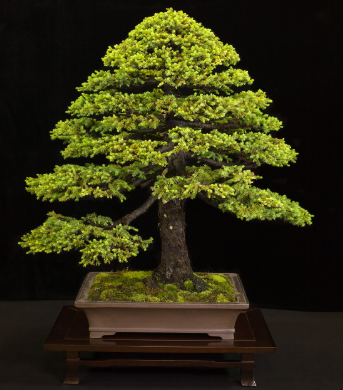
Ezo spruce

Ezo spruce

After a journey that started in Japan and led to the White House, before eventually settling at the Museum, it’s safe to say the Ezo spruce has an amazing history. We spoke with Museum curator Michael James about the small evergreen’s impressive origin story for this month’s historical tree spotlight!

According to James, international bonsai master and philosopher Saburo Kato first presented the tree to the late Japanese Prime Minister Keizō Obuchi in 1998. The prime minister then gifted the spruce to former President Bill Clinton at a formal state dinner in Tokyo that November.

In December 1998, the tree was flown to Washington, D.C. and placed in quarantine at the National Plant Germplasm Quarantine Center, until it was released to the National Arboretum the following year.

The tree was then displayed in the White House’s blue room in 1999, when Saburo Kato personally introduced President Clinton and Prime Minister Obuchi to the sensational art of bonsai. Kato’s well-respected family was the first to establish a nursery in Omiya, Japan – called  Mansei-en – which earned a reputation as a global bonsai hub.

Tomekichi Kato II, Saburo’s father, was the first to develop the horticultural techniques necessary to cultivate the Ezo spruce as a bonsai: Saburo Kato’s spruce boasts the Formal Upright style, exhibiting the rare and highly prized Japanese concept of “Shin.”

Kato collected the tree in 1939 from Kunashir, a Japanese island with a subarctic climate. It has been in training ever since.

In its native area, which ranges from mountains in central Japan to the China-North Korea border, the spruce can grow to be a large evergreen towering at more than 100 feet tall. The tree is used to cold climates, so although it mostly grows during the four warmer months of the year, it can survive under a protective blanket of snow in winter.

The Ezo is difficult to import, as the spruce hosts a fungus known for infecting species of rhododendron and azalea, but the Museum houses three of the trees in the Japanese Pavilion.

James said one should spray the spruce’s foliage to reduce its temperature on hot days, and that the tree must always be kept moist because it grows surface roots.

“Its beauty is most spectacular in the spring, when its lime green shoots emerge from winter dormancy and contrast the dark green needles from years past,” he said.

After new shoots emerge and begin to elongate, curators carefully pinch the shoots to keep the tree in balance and maintain its good form, James said.

He added that the Ezo’s fibrous surface roots allow the tree to produce healthy and full “nebari,” or root flare, which add to the tree’s visual balance. The spruce’s fine and delicate needles are compact, which creates the impression of a tree that is over 100 feet tall when it actually stands less than four feet tall.

“Its bark has a very fine flakiness that contributes to a look of age that is in proportion to its small size as a bonsai,” James said.

Museum Hosts “Irreverent Bonsai Monk” Michael Hagedorn for World Bonsai Day

Screen Shot 2019-04-29 at 10.59.42 AM.png

Michael Hagedorn, a potter turned bonsai artist, will hold demonstrations at the Museum on World Bonsai Day, May 11th, 2019.

Hagedorn hails from Oregon, where he works on bonsai, teaches about his craft and keeps a bonsai blog. He said his interest in bonsai remained on the back burner for many years while he explored other disciplines, like drawing, ceramics and sculpture, that prepared him for a future in bonsai.

When he graduated from The New York State College of Ceramics, Alfred University with a Master of Fine Arts, Hagedorn wanted to craft something – so he made bonsai containers for ten years. Hagedorn had taken care of bonsai since he was 15, but only late in his potter years did the trees start to become more compelling than the vessels they lived in.

“A full day could go by in the ceramics studio, and I was thinking about trees the whole time. I wasn’t concentrating on the pots,” he said. “There are only so many years that you can do that and know you need a change.”

A Background In Bonsai

Hagedorn said he jump-started his bonsai career under the tutelage of Boon Manakitivipart, an internationally recognized bonsai master.

“He was strict and I was a challenging student, willful and opinionated, but he survived me and also prepared me well for study in Japan,” Hagedorn said.

Another one of Hagedorn’s mentors was Japanese bonsai master Shinji Suzuki, the owner of the Taikan Bonsai Museum in Japan and an artist who Hagedorn said created “bonsai of haunting beauty.”

Hagedorn said his three-year apprenticeship at Suzuki’s large nursery was filled with challenging work from the beginning: he wired trees, watered half of Suzuki’s bonsai collection, welcomed clients, prepared the nursery for typhoons in the summer and shoveled snow in the winter.

His book, “Post-Dated: The Schooling of an Irreverent Bonsai Monk,” details his journey through the bonsai world, which was filled with obstacles, learning moments and failures that all led to eventual triumph.

“It’s all in there,” he said. “But what was intended as ironic is the ‘monk’ part. My sempai and I were the opposite of monks – we were survivalists.”

Bonsai As Emblems Of Peace

Suzuki used to tell Hagedorn he should embrace that one of the central themes of bonsai is “peace.” Hagedorn said he watched people connect with bonsai as therapy or use the tree to forge friendships across national boundaries, and understands now why Japan has sought to equate peace and bonsai after two catastrophic world wars.

“In many ways, bonsai both offers peace and is created by it, and perishes in its absence,” he said.

These sentiments are the roots of World Bonsai Day, an internationally celebrated day of appreciation for the ancient art of bonsai as a path to peace.

Hagedorn said he used to sell pots at the National Bonsai & Penjing Museum as a potter long ago, and he is looking forward to visiting the Museum again for his demonstration for World Bonsai Day next month.

Hagedorn added that he has enjoyed studying the Museum’s vast array of bonsai, as its collection is one of the most significant in the United States.

“The entire idea of a museum for small trees is a truly important thing for Westerners,” he said. “There’s an otherworldly quality about bonsai that can be riveting to people.”

Advice To Bonsai Hobbyists

Hagedorn said those looking to delve into the world of bonsai can use books for inspiration, clarification and memorization. But they should also branch out – no pun intended – and take advantage of the hundreds of easily-accessible blogs and videos that comment on recent and specific bonsai techniques.

A hobbyist’s next step is to find a trustworthy teacher who can guide them through their bonsai journey with examples, contrasts and comparisons, as the art is complex and transcends any rulebook one might try to follow.  

“Being a student is a brave act, for one will fail if you’re being at all serious about it,” he said. “Being a physical art, one needs the full quiver of experience, which is only offered in person.”

Hagedorn suggests the budding enthusiast be wary of the amount of plants they own when developing their hobby. For example, caring for five plants tends to draw too much attention to each one, but keeping too many trees will ensure that they will each remain “mediocre.” The ideal number for most hobbyists falls in the range of 20 to 30 trained bonsai, he said.

He added that hobbyists shouldn’t let maintaining bonsai become a burden – keep it fun.

“Bonsai should be a release from the pressures of life, not another cog in that wheel,” Hagedorn said. “Find people to share bonsai with that you enjoy and respect, and that will bring the same energy to the bonsai you work on.”


Learn more from Michael when he speaks at the Museum on World Bonsai Day! Learn more about the day of events here.

HISTORICAL TREE SPOTLIGHT: The Ponderosa Pine

Dan Robinson carves the dead wood on the ponderosa pine.

Dan Robinson carves the dead wood on the ponderosa pine.

While visiting the North American collection, you might notice one bonsai that stands out from the rest – but hardly like a sore thumb. Museum curator Michael James sat down with us to talk about the pine’s history and defining features.

Towering sometimes two whole feet taller than its neighboring bonsai, the ponderosa pine stands at about 56 inches tall and almost as wide. The pine tends to hold its own as a large bonsai because of its large needle size, but careful fertilization and pruning efforts may be employed to reduce its leaves, James said.

This particular pine has been in training since 1966, when U.S. Forest Service employee Dan Robinson collected the tree from a rocky region of Gifford Pinchot National Forest in southwest Washington. The pine is believed to have been about 150 years old when Robinson first brought the pine home and began to train its bristly branches, James said.

“It was an extraordinary feat to get this out of the ground,” he said.

Robinson trained and cared for the pine for about 15 years and affectionately nicknamed it “Jackie Gleason Dancing” for its weaving and curving trunkline, James said. Jackie Gleason was a famous TV comedian in the 1950s and 60s who was known for a swivel-hip motion!

“It has a very strong jin that goes up into the middle of the tree, and then the trunkline drops down and curves back up over the top of that jin,” James said. “It’s kind of like a swinging look to it.”

In October 1980 the U.S. Forest Service held a special donation ceremony for the pine at the Museum in commemoration of the 75th anniversary of the service, he said.

James added that when the pine first arrived, Robinson had situated the tree in a non-traditional container created from rigid styrofoam insulation Robinson had carved into the form of a stone slab and then covered with fiberglass. Robinson’s container was so buoyant that he once placed it in the water and floated the tree around the pond surrounding the National Arboretum’s Visitor Center.

Jim Barrett, a popular potter based in California, made the ceramic container that it currently resides in.

James said Museum curators need to be mindful not to overwater the tree, which is an arid and slow-growing pine. He added that the pine is well adapted to cold weather, so it can remain outside during winter in Washington, D.C. without suffering damaged cells from ice and freezing.

“A lot of care has to be given to this tree, and when a tree is this large it takes more than one person to repot it,” James said. “It would be an honor to re-pot this with Dan Robinson someday.”

FIRST CURATOR'S BLOG: Get Your Bonsai Ready, Spring is Here!

The buzzing of bees and the sweet scent of flowers fill the air at the Museum as the spring weather continues to bring us warm sunny days and refreshing rains. The buds on the trees are beginning to break and fresh tender leaves fill out what was a beautiful winter silhouette. Spring is an exciting time of year for everyone who enjoys the outdoors, although hardly anyone looks  forward to this season more than a bonsai enthusiast.

Screen Shot 2019-04-16 at 4.08.24 PM.png
Screen Shot 2019-04-16 at 4.09.27 PM.png

After a long, cold winter of contemplating our many bonsai endeavors – like re-styling, keeping trees healthy and implementing new horticultural techniques – the bonsai enthusiast is eager for the last frost and the abundance of work ahead. Now that repotting season has started to wind down there are many tasks ahead.

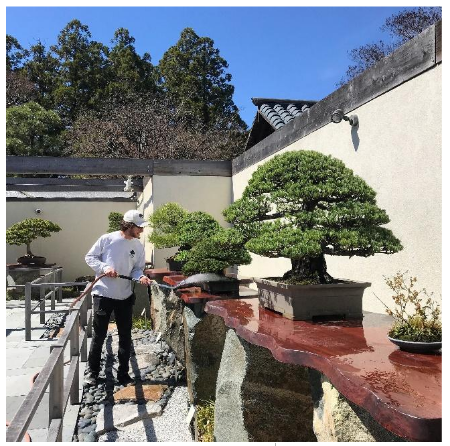
Here at the National Bonsai and Penjing Museum we have been bringing trees out of their winter protection and filling up our pavilions for the enjoyment of our visitors. This task is strenuous, but very rewarding, as the various areas of the Museum are revitalized.

Screen Shot 2019-04-16 at 4.09.43 PM.png

With the wonderful spring weather and new growth rapidly expanding, bonsai caretakers must carefully execute the task of watering. Fertilizing is also very important; one must start out with a humic acid and fish emulsion when the trees show signs of awakening from dormancy, then inorganic fertilizers can be used alternating with organic fertilizer.

These actions are both crucial to maintain the bonsais’ health and ensure exponential growth during the spring and the rest of the growing season.

Another very important spring task is managing the growth distribution of deciduous trees. As the new shoots expand outside of the silhouette of the intended design, they must be cut back to maintain the shape of the tree. However, one should avoid cutting back too much of the new growth, as that will drastically slow the tree’s future maturation. Instead, cutting the outer shoots and leaving interior branches to grow stronger will increase the strength within the foliage pad. This step is crucial when attempting to maintain the health of the interior branches and creating the smallest tree possible.


Screen Shot 2019-04-16 at 4.10.01 PM.png
Screen Shot 2019-04-16 at 4.11.01 PM.png

As we move further into the spring season, make sure to keep up with work on your bonsai and your trees will continue to develop in the right direction. Although bonsai tasks might seem daunting and time-consuming this time of year, don’t forget to get outside enjoy the rest of the beauty that spring brings with your friends and families!


Andy Bello has been selected as the Museum’s 2019 First Curator’s Apprentice.  The National Bonsai & Penjing Museum's First Curator's Apprenticeship  for 2019 is funded by generous grants to the National Bonsai Foundation from Toyota North America and The Hill Foundation. More on Andy here.